TLDR
Persistent erector spinae tightness is often a protective response to weak or poorly coordinated core stabilizers and repetitive movement patterns, not simply a posture problem or sleeping position. Stretching and heat address the sensation temporarily, but the tightness tends to return because the underlying load-sharing problem remains. A root-cause movement assessment looks at the full kinetic chain, including the hips, pelvis, thoracic spine, and deep stabilizers, to identify why the spinal extensors are being asked to do more than their share.
Introduction
You have probably thought it before. Your low back feels tight and ropey, so you chalk it up to sitting too long, sleeping in a bad position, or not stretching enough. You roll out, apply some heat, and feel better for a while. Then it comes back. The same spot, the same sensation, week after week.
That cycle is one of the most common patterns seen in people dealing with chronic low back tightness, and it points to something worth understanding: the erector spinae, the long muscles running along either side of your spine, are often reacting to a problem elsewhere rather than being the problem themselves.
This post covers why low back muscles stay persistently tight, how weak or poorly coordinated core stabilizers shift workload onto the spinal extensors, how repetitive movement habits reinforce that pattern, and what a thorough root-cause assessment actually looks for when the goal is to stop chasing symptoms.
Is the Tightness Coming From Your Back, or From Something Bigger?
The erector spinae are a group of muscles that run along the length of the spine, supporting upright posture, controlling spinal extension, and managing load during movement. When they feel constantly tight, stiff, or fatigued, the instinct is to treat the area directly. That instinct is understandable, but it misses a key piece of the picture.
Muscle tightness does not always mean a muscle is short or damaged. In many cases, it means the muscle is overactive, under-recovered, or compensating for a gap somewhere else in the movement system. Research on erector spinae function and spinal support confirms that these muscles carry significant stabilizing responsibility, making them especially vulnerable to overload when other structures are not contributing efficiently.
Posture and sleep position are real contributing factors, but they are rarely the complete explanation for tightness that returns repeatedly. The muscles running along your spine are responding to the demands placed on them throughout the whole day, not just the position you were in last night.
Common signs that often fit this pattern include tightness after prolonged sitting, stiffness when first standing up, low back fatigue during walking, soreness after lifting, and a persistent need to stretch the same area for only short-term relief.
Why Does Stretching the Erector Spinae Only Help Temporarily?
Stretching the erector spinae reduces the sensation of tightness by temporarily decreasing muscular tension, but it does not change the reason the muscle is overworking in the first place. When you return to the same movement habits, the muscle returns to the same overloaded state. This is the relief loop that many people find themselves stuck in: stretch, feel better, move the same way, tighten up again.
Manual therapy, heat application, and mobility drills are genuinely useful tools for managing symptoms and improving short-term comfort. The limitation is that they target the output rather than the input. Conservative care frameworks for mechanical low back pain consistently emphasize that symptom management works best when paired with active rehabilitation that addresses the movement and stability factors driving the problem.
The goal is not to stop stretching. The goal is to pair relief strategies with better load distribution across the trunk, hips, and pelvis so the erector spinae are not carrying the whole job.
Important: Sharp or worsening pain, numbness, weakness that travels into the leg, changes in bowel or bladder function, fever, major trauma, or unexplained weight loss are symptoms that need prompt assessment from a regulated health professional. These are not situations for self-care strategies.
How Can Weak Core Stabilizers Make Your Back Muscles Work Overtime?
Core stability is not about having strong abdominals in the traditional sense. It refers to the ability of your deep abdominal muscles, spinal stabilizers, pelvic floor, diaphragm, obliques, glutes, and hip stabilizers to coordinate with each other before and during movement. When this coordination is timing- or endurance-based rather than raw strength-based, even people who exercise regularly can have gaps in stabilizer function.
Key stabilizers worth knowing include the transverse abdominis (the deepest layer of the abdominal wall), the multifidus (small muscles sitting directly alongside the vertebrae), the diaphragm, the pelvic floor, and the gluteal and hip muscle groups. When these structures do not engage efficiently, the erector spinae often compensate by taking on a larger stabilizing role.
Think about lifting grocery bags from the car, shovelling snow, getting out of a low chair, or bending to pick something up off the floor. In each of those moments, the trunk and hips are supposed to share the load. When the stabilizers do not coordinate well, the low back extends and braces instead, asking the erector spinae to carry what should be a distributed effort. Over time, that repeated overuse creates the persistent tightness and fatigue that feels like a chronic problem.
Evidence from exercise-based research for low back pain supports targeted stabilization and motor control training as a meaningful part of managing and reducing recurrent low back symptoms. This is not about doing more crunches. It is about improving timing, endurance, and movement strategy across the whole trunk.
Are Repetitive Movement Patterns the Real Reason Your Low Back Stays Tight?
Repetitive daily movements teach the body to rely on the same muscles again and again. Over weeks and months, this builds a default movement pattern, and when the erector spinae become the default stabilizer, they accumulate fatigue and tension without adequate recovery.
Several movement patterns commonly place excess demand on the lower back:
- Bending from the spine rather than hinging through the hips during lifting or reaching
- Standing with the low back arched and ribs flared forward, which compresses the lumbar extensors
- Walking or running with limited hip extension, which forces the low back to compensate for reduced glute drive
- Rotating through the lumbar spine rather than through the thoracic spine and hips during golf, tennis, pickleball, or twisting household tasks
- Sitting for long stretches, then loading the spine immediately without a transition period
For people in Peel Region, these patterns are reinforced by daily life: long commutes through Mississauga, Brampton, and Caledon, extended desk work, winter shovelling, and weekend sport involvement all create repeated loading cycles without enough movement variety or recovery time built in.
The issue is rarely one specific movement that caused damage. It is usually the accumulation of the same pattern, repeated without adequate support from the surrounding musculature.
How Do You Relieve Erector Spinae Tightness Without Just Chasing the Symptom?
Relieving erector spinae tightness in a meaningful way starts with identifying what is causing the muscle to overwork. General self-care approaches that address both comfort and contributing factors include the following:
- Gentle walking or low-intensity movement to reduce protective guarding without adding load
- Diaphragmatic breathing to decrease excessive trunk bracing and improve deep stabilizer engagement
- Hip mobility work when hip stiffness is pushing movement demands into the low back
- Core control exercises such as dead bug variations, bird dog progressions, and anti-rotation work, when symptoms allow
- Glute and hip strengthening to reduce how much work the spinal extensors are doing during daily movements
- Load management for activities that consistently flare symptoms
Exercise selection should reflect your current symptoms, mobility, strength, and medical history. A one-size-fits-all protocol does not account for the variability in how and why people develop this pattern. This is exactly why understanding the “why” behind your tightness matters before adding more volume or intensity to a routine.
If you want a deeper look at how treatment approaches connect to erector spinae function and posture, the Fix Your Posture By Fixing Your Erector Spinae page outlines how addressing these muscles specifically fits into broader spinal health.
What Does a Root-Cause Assessment Actually Look For?
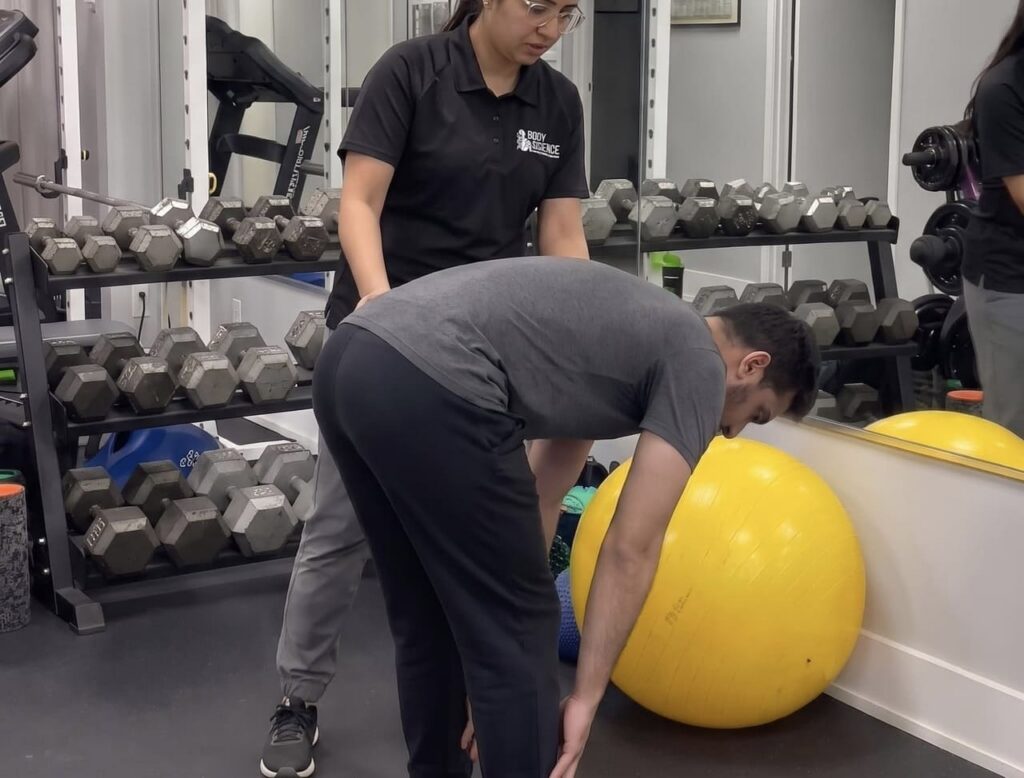
A thorough assessment goes well beyond the site of tightness. At Body Science Therapy, the Body Code assessment evaluates your entire kinetic chain to identify where load is being generated, where it is being absorbed poorly, and why the erector spinae are being asked to compensate. This means examining pain behavior and history, lumbar and thoracic mobility, hip and pelvic movement, core coordination and endurance under load, breathing and bracing strategy, gait mechanics, and patterns like squatting, hinging, and rotation.
Strength differences between sides, nerve-related signs when symptoms travel or cause weakness, and sport-specific or task-specific mechanics are all part of the picture. The goal is to understand why the muscle is overworking rather than simply reducing tension at the site.
When appropriate, approaches such as Neurokinetic Therapy (NKT), a method that assesses motor control patterns and identifies compensation in the nervous system, Dolphin Neurostim MPS, and scar tissue management are integrated alongside movement retraining and progressive strengthening. Care is structured around what each person needs to return to their specific work, sport, or daily activities, and outcomes vary depending on individual factors and contributing causes.
Key Takeaways
- The erector spinae are long muscles running along the spine that frequently become overactive and tight when other stabilizers are not doing enough work.
- Tightness in the low back muscles does not always mean the muscle is short or damaged; it often signals protective overuse or compensation from elsewhere in the movement chain.
- Stretching addresses the sensation of tightness but does not correct the load-sharing problem that causes the muscle to overtighten repeatedly.
- Weak or poorly coordinated core stabilizers, including the transverse abdominis, multifidus, glutes, and pelvic floor, are a common and assessable contributor to erector spinae overuse.
- Repetitive movement patterns such as spine-dominant bending, limited hip extension during gait, and lumbar rotation during sport reinforce the overuse cycle over time.
- A root-cause assessment evaluates the full kinetic chain and movement strategy, not just the location of tightness, to identify what is driving the pattern and what targeted steps are appropriate.
Ready to Stop Managing the Symptom and Start Addressing the Source?
If your low back muscles stay persistently tight despite stretching, posture adjustments, or previous rounds of treatment, the pattern may be worth examining more closely. Body Science Therapy serves patients across Peel Regional Municipality, including Mississauga, Brampton, and Caledon, with movement and stability assessments focused on identifying why the muscles are overworking rather than simply reducing tension at the site.
A personalized assessment can help clarify what is driving the tightness, which structures are not contributing enough, and what steps are appropriate for building more efficient, resilient movement. Book an assessment and take a concrete step toward understanding your low back rather than managing it indefinitely.
FAQ
Why are my low back muscles always tight even though I stretch?
Repeated low back tightness that returns after stretching is usually a sign that the muscle is overworking rather than simply being short or stiff. Common reasons include poor load sharing from weak or poorly timed stabilizers, hip stiffness redirecting movement demands into the lumbar spine, repetitive movement patterns that place ongoing demand on the same muscles, and insufficient recovery between loading sessions. Stretching may relieve the sensation temporarily, but the muscle returns to the same state once you resume the same movement habits. Addressing the underlying coordination and load-sharing pattern tends to produce more durable changes.
Can a weak core cause erector spinae tightness?
Yes, poorly coordinated or under-active core stabilizers are a frequently identified contributor to erector spinae overuse. When the deep abdominal muscles, multifidus, pelvic floor, and glutes do not engage efficiently during movement, the spinal extensors take on more of the stabilizing workload. This does not mean everyone with tight erector spinae has a weak core in a conventional sense; the issue is often about motor control timing and endurance rather than absolute strength. Assessing how the core coordinates during functional movement is an important part of understanding the full picture.
When should I get my tight erector spinae assessed by a professional?
Seek assessment if tightness persists beyond a few weeks, returns repeatedly, limits your ability to work or be active, followed an injury, or is accompanied by pain radiating into the leg, numbness, or weakness. If previous treatment brought only short-term improvement, a more thorough movement and stability assessment is worth pursuing. Seek urgent medical attention if you experience changes in bowel or bladder control, significant neurological symptoms such as progressive leg weakness, fever, major trauma, or unexplained weight loss alongside back symptoms. These require immediate evaluation rather than self-care approaches.