We’re pleased to announce our second location in Pickering – Book your appointment today.

Physiotherapy for Rheumatoid Arthritis in Mississauga

RA physical therapy Mississauga

Rheumatoid arthritis reshapes the way you move — and over time, your body adapts in ways that can generate a whole new layer of pain and dysfunction. At Body Science Therapy in Mississauga, our neuromuscular physiotherapy approach is designed to address those compensatory patterns, the muscle imbalances, and the secondary pain that medication alone may not reach. Using our proprietary Body Code™ assessment alongside Neurokinetic Therapy (NKT) and Dolphin Neurostim MPS, we work to support functional movement and help you rebuild strength over time.

Is This Your Experience with Rheumatoid Arthritis?

Rheumatoid arthritis is a diagnosed condition, but living with it extends well beyond the inflamed joints your rheumatologist monitors. If your body still feels unreliable despite your current treatment plan, any of the following experiences may resonate with you:

Significant morning stiffness that shapes the entire trajectory of your day before it has properly begun.

Secondary pain emerging in your lower back, hips, or shoulders — a direct consequence of unconsciously shifting how you move to protect sore joints.

Reduced grip strength or limited hand mobility that makes ordinary tasks and daily activities feel unexpectedly demanding.

A persistent physical fatigue and an underlying apprehension about triggering a flare-up through normal movement or exercise.

rheumatoid arthritis pain management
neurokinetic therapy Mississauga

How Does Physiotherapy Help with Rheumatoid Arthritis?

Over time, rheumatoid arthritis can push your body into guarded, compensatory movement patterns. Stiff hips may begin compensating for painful knees. A rounded upper back may develop in response to swollen wrists. These secondary dysfunctions can generate their own pain that compounds the primary condition — and they often go unaddressed by medical management alone.

Our Mississauga physiotherapy approach begins with the proprietary Body Code™ assessment, a comprehensive kinetic chain analysis that maps these upstream neuromuscular patterns rather than focusing solely on the site of pain. This gives your practitioner a clear picture of where dysfunction originates and how it travels through your body.

From there, treatment is applied with precision. Neurokinetic Therapy (NKT) works at the neurological level to help address the brain's motor control patterns, working to re-establish movement sequences that chronic RA can disrupt. Simultaneously, Dolphin Neurostim MPS uses concentrated microcurrent impulses that aim to calm the autonomic nervous system, help reduce localized tissue tension, and support pain management without additional pharmaceuticals.

We also assess scar tissue and fascial restrictions that may contribute to restricted mobility. Together, these targeted physiotherapy interventions aim to support functional movement by addressing the neuromuscular factors contributing to secondary pain.
What Should You Expect from Physiotherapy Treatment?

Initial Assessment

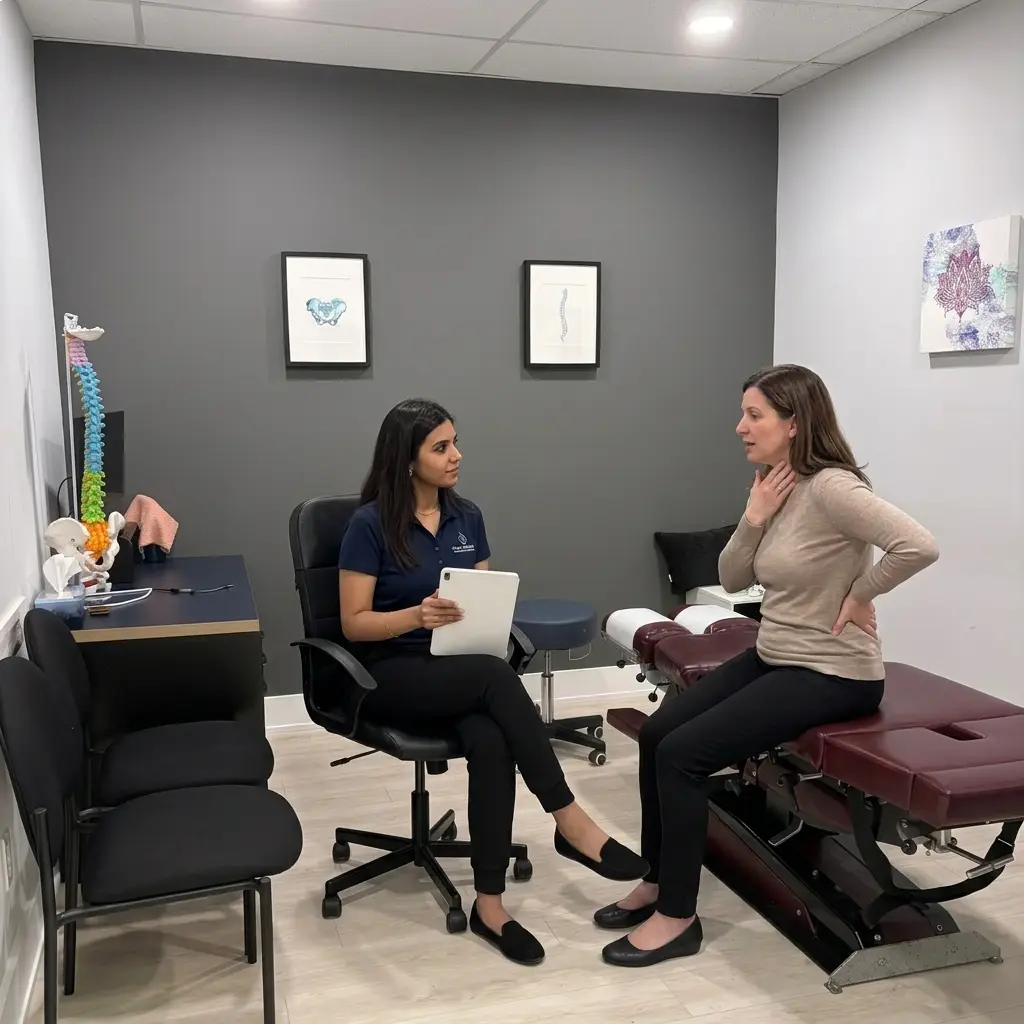
Your first visit centres on the Body Code™ assessment — a comprehensive clinical evaluation of your entire kinetic chain. Your practitioner documents compensatory movement patterns, identifies areas of neuromuscular dysfunction, and examines the interplay between your joints, muscles, and nervous system. Your current RA symptoms are carefully factored into all observations from the outset.

Treatment Sessions

Every session is hands-on and personalized to your presentation. Depending on what your assessment reveals, your practitioner may apply Neurokinetic Therapy (NKT) to address motor control sequencing, Dolphin Neurostim MPS to help regulate the autonomic nervous system, and targeted scar management where relevant. The focus throughout remains on addressing contributing factors and supporting functional restoration.

Realistic Timeline

Chronic autoimmune conditions call for ongoing management rather than a one-time fix. Many patients report noticing functional improvements and a meaningful reduction in secondary compensatory pain within 4 to 8 sessions over a 4 to 6-week period. From there, treatment often transitions toward a more independent, self-managed routine to help sustain long-term progress.

How Does Physiotherapy Compare to Other Rheumatoid Arthritis Treatments?

Managing RA often involves layering multiple approaches. Understanding what each option addresses — and where it may fall short — can help you decide how neuromuscular physiotherapy fits into your overall care plan.

Approach What It Does Functional Considerations
Medications (DMARDs / Biologics) Manages autoimmune inflammation driving the condition at the systemic level. Focuses on the systemic process rather than compensatory movement patterns, secondary mechanical pain, or muscle weakness.
Corticosteroid Injections Can reduce localized inflammation temporarily, providing short-term symptom relief. Addresses local inflammation rather than functional movement or ongoing compensatory patterns.
Standard Physiotherapy Provides exercise prescription and general modalities for musculoskeletal symptoms. May take a more general approach than a neuromuscular assessment specific to RA presentations.
Body Code™ Neuromuscular Physiotherapy Aims to address compensatory patterns, motor control sequencing, and nervous system dysregulation. Complements but does not replace medical disease management from your rheumatologist.
Neuromuscular physiotherapy at Body Science Therapy is designed to complement your rheumatologist’s care — not replace it. Its value lies in addressing the functional dimensions that medication may not reach: the compensatory patterns, motor control deficits, and nervous system dysregulation that can quietly develop over years of guarded, protective movement.

Physiotherapy for Rheumatoid Arthritis at Body Science Therapy

If you are ready to move beyond symptom management and address the neuromuscular changes that RA has introduced to your movement, Body Science Therapy’s physiotherapy program is built with that goal in mind. Our approach integrates the Body Code™ assessment, Neurokinetic Therapy (NKT), and Dolphin Neurostim MPS into a structured treatment plan tailored to your specific RA presentation and movement history.

To learn more about how we approach physiotherapy and what a first visit looks like, explore our physiotherapy service at Body Science Therapy. We welcome patients from across Mississauga and the GTA who are ready to take a targeted, thoughtful approach to their RA management.

Why Patients with Rheumatoid Arthritis Choose Body Science Therapy

Addressing RA through physiotherapy calls for more than a standard clinical toolkit. It requires a structured, analytical approach to the neuromuscular consequences of living with a chronic autoimmune condition. Our Mississauga clinic is built around that complexity.

Neurokinetic Therapy (NKT)

Trained and certified in NKT for neurological motor control work, addressing movement dysfunction at its source rather than only at the site of pain.

Dolphin Neurostim MPS

Advanced clinical application of Dolphin Neurostim MPS for autonomic nervous system regulation and chronic pain management in complex autoimmune presentations.

Scar & Fascial Assessment

Dedicated evaluation of scar tissue and fascial restrictions, assessing their neurological and inflammatory implications as part of the full clinical picture.

Body Code™ Assessment System

A proprietary, structured whole-body kinetic chain analysis that helps ensure upstream mechanical patterns are identified and addressed — not overlooked.

Frequently Asked Questions About Physiotherapy for Rheumatoid Arthritis

Standard physiotherapy often provides generalized exercises without mapping how your full movement system has been affected. At Body Science Therapy, we use the proprietary Body Code™ assessment to identify compensatory patterns across your entire kinetic chain. We then apply Neurokinetic Therapy (NKT) to help address motor control neurologically, targeting where dysfunction may originate rather than solely where pain is felt.
Dolphin Neurostim MPS applies concentrated microcurrent impulses that aim to calm the autonomic nervous system and help reduce localized tissue stress, supporting pain management without placing mechanical load on inflamed joints. As a pharmaceutical-free complement to your existing medical treatment, it can be applied during both active flare-ups and periods of remission. Many patients find it a useful addition to their overall RA management approach.
Corticosteroid injections can reduce local inflammation temporarily and provide meaningful short-term relief, while neuromuscular physiotherapy aims to support functional movement and help address muscular imbalances that may sustain ongoing joint stress. The two approaches work at different levels of the condition, and many patients find both useful at different stages of their RA management. They can be used as complementary tools rather than competing alternatives.
Yes, with important modifications in place. During an active flare-up, your practitioner avoids applying mechanical force to inflamed joints and instead focuses sessions on nervous system down-regulation, gentle mobility work, and Dolphin Neurostim MPS for pain support. These approaches are designed to provide value during flare-up periods without aggravating active joint inflammation.
Medication manages the systemic autoimmune process driving RA, but it may not address the compensatory movement habits, muscle weakness, or secondary mechanical pain that can develop from years of protecting sore joints. Physiotherapy is designed to work at this functional layer, focusing on the neuromuscular dimension of RA that biologic or DMARD medications are not intended to target. Together, the two approaches can provide more comprehensive management of the condition’s full impact.

These modalities are delivered by registered physiotherapists and are generally billed under your standard physiotherapy insurance coverage. Body Science Therapy offers direct billing for most major extended health benefit plans, making the process straightforward for most patients. We recommend contacting our front desk before your first visit to confirm the specific coverage details of your individual plan.

Insurance Coverage and Direct Billing

Physiotherapy at Body Science Therapy is typically covered under extended health benefit plans, including those held by many Mississauga corporate employees. Specialized neuromuscular modalities like Neurokinetic Therapy and Dolphin Neurostim MPS are integrated into registered physiotherapy sessions and billed under your standard physiotherapy line item.

We offer direct billing for most major insurance plans. Contact our clinic before your first appointment to confirm your specific coverage details so there are no surprises on the day of your visit.

Serving Mississauga and the Surrounding Greater Toronto Area

Body Science Therapy is centrally located in Mississauga, Ontario, with convenient access via Hwy 401, 403, and the QEW. We welcome patients from across Mississauga — including Streetsville, Port Credit, and Erin Mills — as well as neighboring communities including Oakville, Brampton, and Etobicoke. If you are traveling from elsewhere in the Greater Toronto Area for targeted rheumatoid arthritis physiotherapy, our neuromuscular approach is worth the trip.

Ready to Address Your Rheumatoid Arthritis at the Source?

Your body deserves a treatment approach as thoughtful as the condition itself. If you are ready to move beyond symptom management and work toward rebuilding functional strength, Body Science Therapy in Mississauga is ready to build that plan with you.

Same-day appointments are available.