TLDR
Neck pain originates from several distinct sources, including muscle strain, cervical joint dysfunction, and nerve irritation, and effective care depends on identifying which one is actually driving your symptoms. Physiotherapists assess cervical mobility, upper trapezius tension, posture patterns, and neurological signs before prescribing any intervention. A targeted assessment, not a generic exercise program, is the starting point for meaningful recovery.
Neck pain is one of the most common complaints that brings people through a physiotherapy door, yet two people with nearly identical symptoms can have completely different causes. One person’s stiff neck traces back to a restricted cervical joint. Another person’s comes from a deep neck flexor endurance problem that has been building for months. A third is experiencing referred pain from nerve irritation in the lower cervical spine. The sensation at the surface tells you something hurts. It rarely tells you why.
This is the clinical reality behind the question of how to deal with neck pain: treatment decisions work best when they follow a thorough assessment, not a set protocol applied to every patient regardless of presentation. Before any exercise, manual therapy, or education program is prescribed, a physiotherapist works to understand the mechanical, muscular, and neurological picture specific to that person.
This post walks through the key areas physiotherapists assess, what each area reveals, and how those findings shape the care that follows. Whether you are dealing with recurring stiffness, upper trapezius tension, neck pain with headaches, or symptoms that have not responded to previous treatment, understanding the assessment process gives you a clearer picture of what informed care actually involves.
Why Start With the Source, Not the Symptom?
The location of neck pain rarely tells the full story. Pain felt at the base of the skull, across the upper trapezius, or deep into one side of the neck can originate from the cervical joints, surrounding muscles, the thoracic spine, the jaw, the shoulder complex, or a sensitized nerve root. Treating only the spot that hurts, without understanding what is loading or irritating that tissue, often produces short-term relief followed by the same symptoms returning.
A physiotherapy assessment begins with a detailed subjective history. This covers when and how symptoms started, what positions or activities aggravate them, whether pain is constant or intermittent, how sleep position affects symptoms overnight, what previous treatment looked like and how the body responded, and whether symptoms have been changing over time. This information helps the clinician narrow down whether the presentation is likely mechanical, postural, nerve-related, or influenced by factors like stress or systemic health.
Physiotherapists are also trained to screen for red flags before proceeding with any physical assessment or treatment. Symptoms requiring prompt medical evaluation include neck pain following significant trauma, sudden severe headache unlike any previous headache, fever combined with neck stiffness, progressive weakness or numbness in the arms or legs, unexplained weight loss, dizziness with neurological signs, or any new changes to bowel or bladder function. When these signs are present, the appropriate step is medical referral, not physiotherapy intervention.
What Does Cervical Mobility Assessment Actually Show?
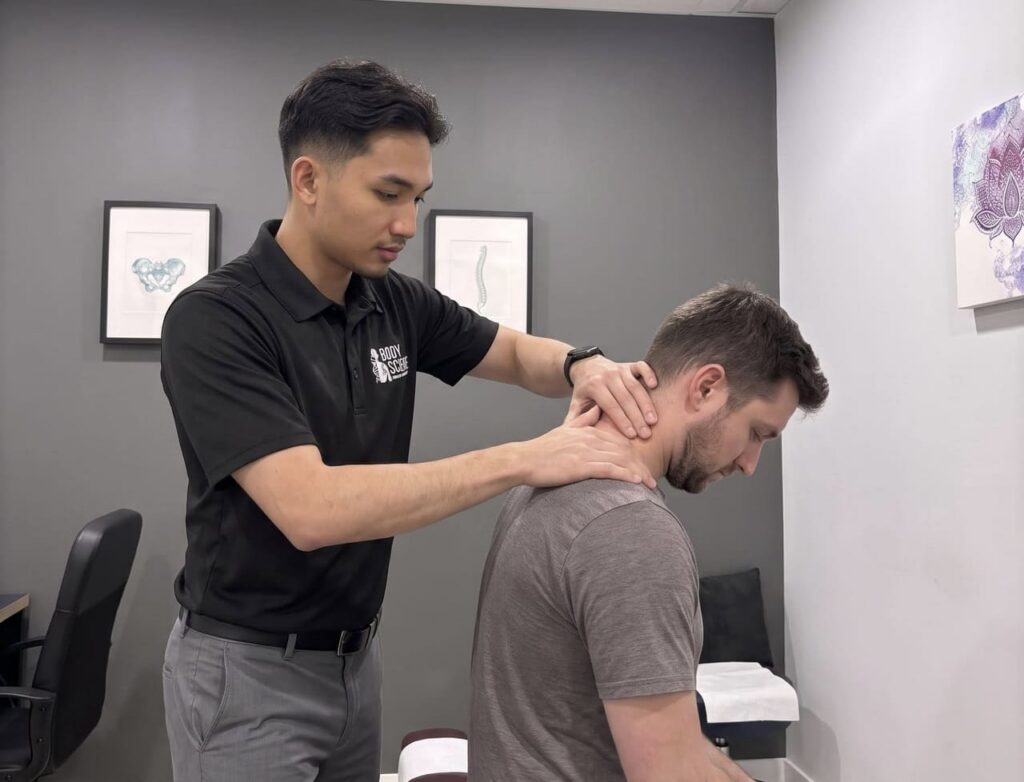
Cervical mobility assessment involves observing and measuring how the neck moves through rotation, flexion, extension, and lateral side bending. The goal is not simply to determine how many degrees of motion exist. The more informative question is how the neck moves: whether there is guarding, whether pain is provoked at a specific point in the range, whether one direction is significantly restricted compared to the other side, and whether arm symptoms appear during any movement.
Restricted rotation to one side often points toward segmental joint stiffness or muscular guarding in that region. Pain with extension suggests sensitivity in the posterior cervical structures. When arm symptoms reproduce during neck movement, nerve screening becomes an important next step. Research on cervical spine movement assessment reinforces why systematic movement screening matters when symptoms extend beyond the neck itself, including into the head, shoulder, or arm.
Assessment findings guide whether early treatment should focus on calming an irritable presentation, restoring movement quality, building strength and endurance, or whether referral for imaging or medical assessment is warranted. Better movement quality, rather than simply more range, is the clinical benchmark.
Is Upper Trapezius Tension the Cause or a Compensation?
Stiff neck and upper trapezius tension is among the most frequent complaints physiotherapists hear, particularly from people who spend long hours at a desk, drive regularly, carry loads unevenly, manage high stress, or engage in weekend physical activity after prolonged inactivity. The upper trapezius sits at a mechanical crossroads between the neck, shoulder, and upper back, which makes it vulnerable to overload in multiple scenarios.
What physiotherapists assess in this region goes well beyond palpating for tightness. Clinicians evaluate the levator scapulae, deep neck flexors, shoulder blade position and movement control, breathing patterns during movement, and the neck’s overall load tolerance across positions. This broader picture addresses a key clinical point: upper trapezius tension is frequently a compensatory response to weakness or restriction elsewhere, not the original source of the problem.
When the deep neck flexors lack endurance, or when shoulder blade control is poor, the upper trapezius takes on more demand than it is built to sustain. Stretching the upper trapezius repeatedly without addressing those underlying patterns produces temporary relief at best. Overactivity in this region also connects to cervicogenic headache patterns, shoulder discomfort, and reduced tolerance for sustained neck positions. Treatment approaches that address strength, motor control, posture modification, and cervical joint mobility tend to produce more durable changes in these presentations than stretching alone.
What Do Posture Patterns Reveal About How Your Neck Is Being Loaded?
Posture is a loading pattern, not a fixed quality that is either good or bad. The way you sit, stand, reach, lift, and move through daily tasks determines how force is distributed across your cervical spine and surrounding structures throughout the day. Physiotherapists assess posture in the context of your actual demands: workstation setup, driving position, how you carry weight, how you train or play sport, and how your body moves when it is fatigued or guarding against pain.
Several patterns appear frequently in people with persistent neck symptoms:
- A forward head position places increased demand on the cervical extensor muscles, which must work harder to support the head as it shifts in front of the body’s center of gravity.
- Rounded shoulder posture alters shoulder blade mechanics, which changes how the neck and upper back share load during arm movements.
- A stiff thoracic spine limits the range available at that segment, which causes the cervical spine to take on a disproportionate share of movement during daily tasks.
- Guarded, compressed posture is common after concussion, recurrent headache episodes, or long-standing chronic pain, and often persists even after the acute episode has resolved.
Correcting these patterns is rarely about holding a rigid aligned position. The clinical aim is improving variability, building tolerance for sustained positions, and supporting the endurance needed for real daily tasks. For weekend warriors, people managing chronic pain, and those who have not improved with generic care, this kind of posture analysis frequently identifies loading habits that no standard exercise program has previously addressed.
Muscle Strain, Joint Dysfunction, or Referred Nerve Irritation: How Do They Differ?
This is the central differentiation that shapes everything that follows in treatment. These three categories overlap frequently, but each carries distinct assessment findings and different clinical implications.
Category | Common Assessment Findings | Clinical Implications |
Muscle strain | Tenderness localized to a specific muscle region, pain with resisted movement, symptoms linked to a specific activity or prolonged position | Load management, graduated strengthening, soft tissue work, pacing education |
Joint dysfunction | Pain with particular neck movements, stiffness or catching sensation, possible referral into the head, upper back, or shoulder | Manual therapy when appropriate, mobility work, cervical and thoracic joint assessment |
Nerve irritation | Pain, tingling, numbness, burning, or weakness into the arm or hand, symptoms influenced by neck or arm position, positive nerve tension testing | Careful nerve mobility work, position modification, neurological monitoring, referral if signs progress |
Neck pain with headaches introduces an additional layer. Cervical joints and muscles in the upper cervical spine, particularly at the C1 to C3 segments, have well-established anatomical connections to headache pathways. Assessment in this context considers headache behaviour, frequency, neurological symptoms, migraine history, and any history of concussion or head injury. This information shapes whether cervicogenic headache treatment is appropriate or whether medical co-management is the more appropriate direction.
Research on rehabilitation frameworks for mechanical neck pain describes how symptom irritability and mechanical stress patterns guide sequencing decisions in recovery. A highly irritable presentation calls for a different early approach than a stiff, non-irritable neck with limited rotation.
How Do Assessment Findings Shape the Actual Treatment Plan?
Findings from mobility, strength, nerve, posture, and subjective history assessments allow the clinician to select interventions matched to your specific presentation rather than defaulting to the same neck pain relief exercises used for every patient. A review of manual therapy approaches for persistent mechanical neck pain supports the value of hands-on care as part of a broader, individualized treatment framework.
Depending on the assessment picture, a treatment plan for neck pain at Body Science Therapy incorporates some or all of the following:
- Gentle mobility work targeting restricted cervical or thoracic segments
- Deep neck flexor and upper back strength and endurance training
- Manual therapy for joint or soft tissue sensitivity where clinically appropriate
- Education on workstation setup, sleep position, lifting mechanics, and flare-up management
- Nerve mobility techniques when nerve irritation has been identified and is safe to address
- Headache-informed care when cervical involvement in headache patterns is present
At Body Science Therapy, this approach goes further than conventional symptom management. The Body Code assessment evaluates your full kinetic chain to identify the root-cause patterns contributing to symptoms. This framework pairs conventional physiotherapy with targeted therapies including Neurokinetic Therapy (NKT), a method that identifies compensatory muscle recruitment patterns, Dolphin Neurostim MPS, which uses microcurrent stimulation at acupuncture and trigger points, and scar tissue management when relevant. The goal is to give you an informed understanding of your own movement patterns and the tools to support your function over time.
Treatment is progressed based on symptom irritability, how the body responds between sessions, and functional goals. Outcomes vary depending on the cause, how long symptoms have been present, overall health, and consistency with the plan. Many people notice improved mobility, reduced muscle tension, and better tolerance for daily activities as their program advances. For neck pain that has not responded to previous generic treatment, a more thorough assessment is frequently the step that changes the direction of care.
If you are looking for more information about how we approach this at our clinic, visit our Neck Pain service page.
Key Takeaways
- Neck pain originates from different sources including muscle strain, cervical joint dysfunction, and nerve root irritation, and identifying the source is what guides effective treatment selection.
- Cervical mobility assessment evaluates the quality and direction of neck movement, not just the quantity, to identify restrictions, guarding, and nerve-related signs.
- Upper trapezius tension is frequently a compensatory response to weakness or restriction elsewhere, and repeated stretching without addressing those underlying patterns tends to produce only short-term relief.
- Posture functions as a loading pattern; physiotherapists assess how your daily positions and movements distribute force through the cervical spine and surrounding structures.
- Neck pain with headaches requires assessment of cervical joint involvement, neurological symptoms, and relevant medical history before any headache-related treatment begins.
- Red flag symptoms including sudden severe headache, progressive neurological weakness, fever with neck stiffness, or symptoms following significant trauma require prompt medical evaluation, not physiotherapy.
Ready to Understand What Is Driving Your Neck Pain?
Neck pain care works best when the assessment is specific. At Body Science Therapy, physiotherapy begins by identifying the mechanical, muscular, neurological, and movement factors contributing to your symptoms, before any treatment protocol is applied.
For patients across Peel Regional Municipality dealing with recurring neck pain, upper trapezius tension, headaches, or symptoms that have not responded to previous care, booking an assessment is the step that clarifies what is actually going on and where treatment should focus.
Book a neck pain assessment to understand what is driving your symptoms and build a treatment plan matched to your mobility, strength, posture, and functional goals.
Frequently Asked Questions
What is the best way to deal with neck pain?
The most effective first step is identifying the likely source of your symptoms rather than applying a general exercise routine. Some presentations respond to mobility work, others require strength and endurance training, and some need nerve screening or medical referral. If your neck pain is persistent, worsening, or associated with arm symptoms, a physiotherapy assessment provides a safer and more informed starting point than self-managing with generic exercises.
Can upper trapezius tension cause headaches?
Upper trapezius and cervical muscle tension can contribute to headache symptoms in certain presentations, but headaches have many possible contributors. A thorough assessment considers cervical mobility, joint sensitivity at the upper cervical levels, muscle tone patterns, neurological symptoms, migraine history, concussion history, and symptom triggers before drawing any connection between muscle tension and headache behaviour.
When should neck pain be checked urgently?
Seek urgent medical attention if neck pain follows significant trauma, or if it is accompanied by a sudden severe headache unlike anything you have experienced before, fever, unexplained weight loss, chest pain, difficulty speaking, vision changes, loss of coordination, fainting, or progressive weakness or numbness in the arms or legs. New bowel or bladder changes alongside neck symptoms also require immediate medical evaluation.