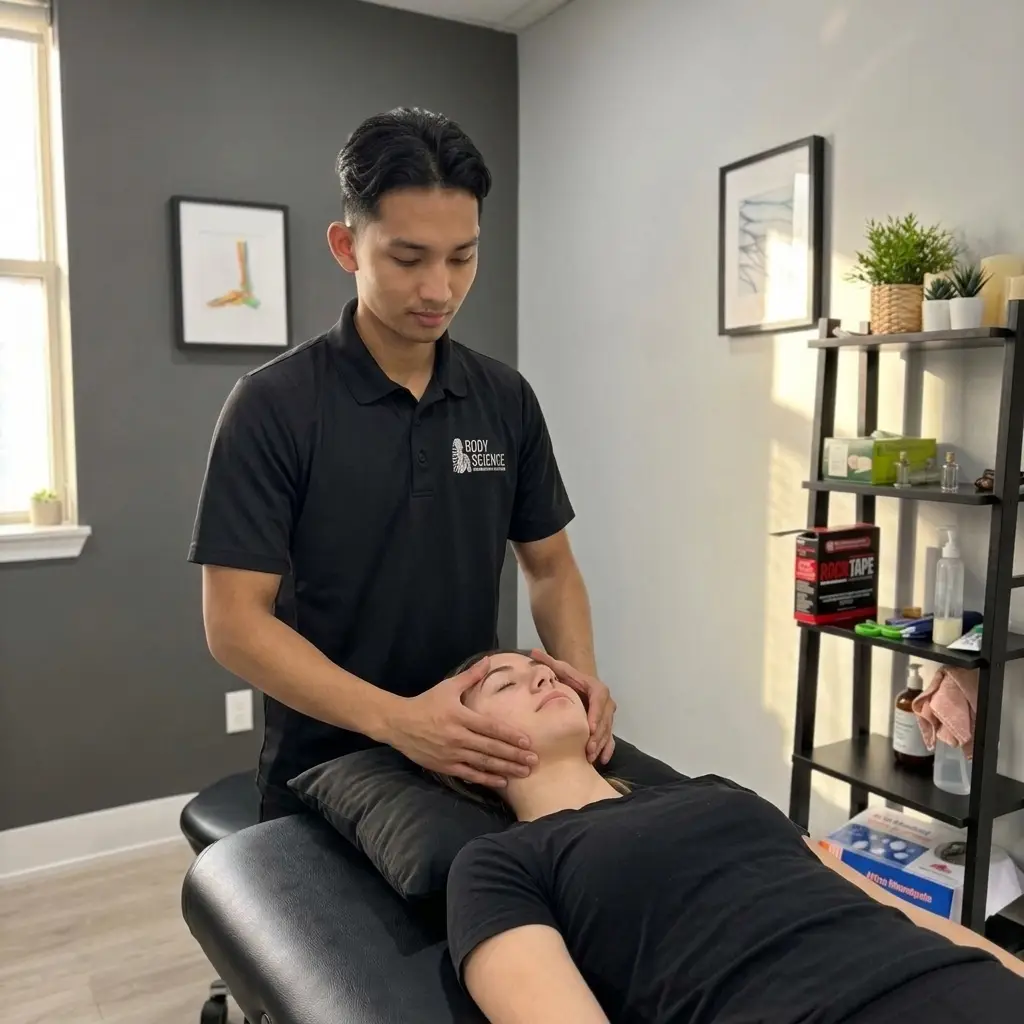
If your recovery has plateaued and you are ready to move beyond simply waiting, active neuromuscular rehabilitation may help. At Body Science Therapy, we use the Body Code™ assessment, Neurokinetic Therapy (NKT), and Dolphin Neurostim MPS to address factors associated with facial paralysis and support meaningful recovery.
Same-day appointments are available — take the first step toward supporting your facial movement today.
Incomplete eye closure or persistent dry eye on the affected side
Asymmetrical facial movement when smiling, speaking, or raising your eyebrows
Difficulty eating, drinking, or keeping liquids on one side of the mouth
Involuntary facial movements — such as your eye closing when you smile (synkinesis)
A pulled or tight sensation on the affected side, particularly at rest
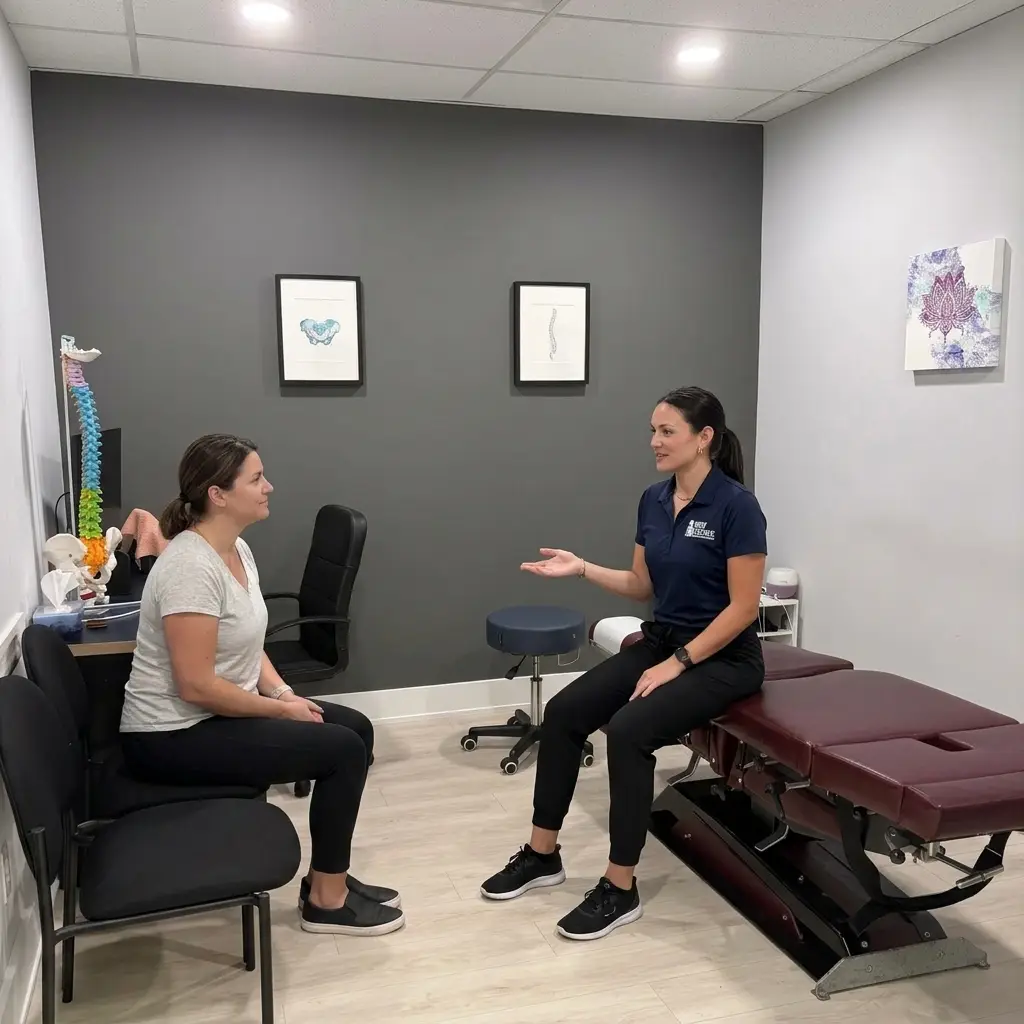
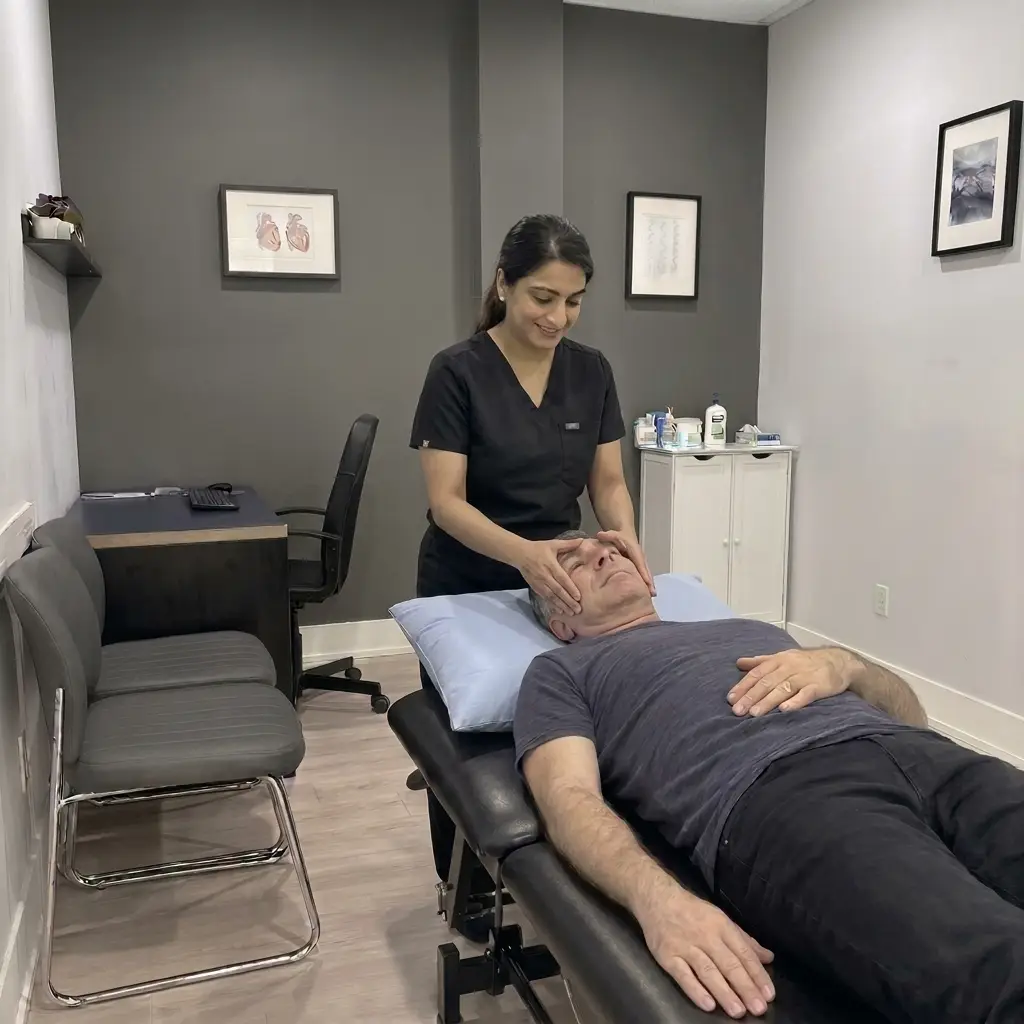
Bell's Palsy is a neurological condition, and supporting recovery requires more than a standard set of facial exercises. At Body Science Therapy in Mississauga, our approach begins with the Body Code™ assessment — a systematic clinical evaluation that examines your entire kinetic chain, not just your face. This broader perspective matters because the muscular systems supporting facial nerve function are deeply interconnected with the rest of the body. Identifying neuromuscular and compensatory patterns beyond the face allows us to address contributing factors that a surface-level approach may miss.
Neurokinetic Therapy (NKT) forms the second pillar of our protocol. NKT targets the brain-to-muscle communication pathway directly — identifying which muscles are overactivating as compensations, working to reduce those patterns, and facilitating proper voluntary facial muscle activation. This neurologically focused re-education may support the return of controlled movement and help lower the risk of developing or worsening synkinesis.
The third element is Dolphin Neurostim MPS, which delivers targeted microcurrent impulses to key neurological points associated with facial nerve function. This modality is designed to calm nervous system stress, reduce compensatory tension in the face and jaw, and support the physiological conditions associated with nerve recovery. Together, these three approaches form a cohesive, comprehensive physiotherapy protocol for Bell's Palsy recovery.
Your recovery roadmap begins with a thorough Body Code™ assessment. We evaluate your facial symmetry, voluntary movement capacity, and the full kinetic chain. Rather than treating your face in isolation, we identify neuromuscular patterns and compensatory movement behaviors throughout the body that may be influencing your facial nerve recovery. This comprehensive picture allows us to build a treatment plan that is genuinely personalized to your situation before your first session begins.
A typical session draws on multiple approaches working in concert. Hands-on manual techniques address compensatory tension across the face, jaw, and neck. Neurokinetic Therapy (NKT) works to correct improper brain-to-muscle signaling at the root level. Dolphin Neurostim MPS then supports the nervous system's recovery environment through targeted microcurrent application. Throughout your sessions, you will also be guided through precise, safe facial movements designed to support nerve recovery without reinforcing incorrect activation patterns.
Recovery timelines vary based on when intervention begins and the complexity of your presentation. Many patients observe functional improvements and reduced facial tightness within 4 to 8 active neuromuscular therapy sessions. Cases involving established synkinesis or longer-standing nerve disruption may require several months of consistent care to support thorough neuromuscular re-education. Your clinician will provide a personalized schedule following your initial evaluation.
| Approach | What It Offers | Key Consideration |
|---|---|---|
| Active Neuromuscular Physiotherapy (Body Code™, NKT, MPS) | Targets factors associated with facial paralysis; aims to support voluntary muscle control and may help reduce synkinesis risk. | Requires commitment to a treatment plan; may be most beneficial when initiated proactively after medical clearance. |
| Watchful Waiting | Spontaneous recovery occurs in many cases, particularly in mild presentations within the first 3 to 6 months. | May not address compensatory patterns or synkinesis risk, and can delay targeted neurological intervention. |
| Acupuncture Therapy | May help reduce localized inflammation, pain, and discomfort associated with facial nerve disruption. | Addresses pain and inflammation, and takes a different approach than re-training brain-to-muscle communication pathways. |
| Generic Facial Exercises | Accessible and low-cost; widely available through online resources. | Unsupervised exercises may reinforce incorrect movement patterns, potentially worsening synkinesis over time. |
What distinguishes our clinic is not any single technique in isolation — it is the deliberate, systematic integration of the Body Code™ assessment, Neurokinetic Therapy (NKT), and Dolphin Neurostim MPS into a unified protocol built around your nervous system’s recovery needs. Our team brings trained clinical experience in scar management and the broader neurofunctional implications of facial nerve disruption — areas that generalized practice often does not prioritize.
If you are considering active rehabilitation and want to understand what this approach looks like in practice, learn more about our physiotherapy service at Body Science Therapy and take the first step toward supporting your facial movement.
Our team applies Neurokinetic Therapy (NKT) and Dolphin Neurostim MPS with condition-specific precision — moving beyond generic rehabilitation approaches that do not address the neurological dimension of Bell's Palsy.
We evaluate the entire kinetic chain — not just the face — to identify upstream mechanical and neuromuscular factors that may be influencing your facial nerve recovery and slowing progress.
We bring trained clinical understanding of how scar tissue and nerve disruption interact systemically — including their full-body implications that are frequently overlooked in conventional care settings.
We empower you with physiological knowledge and highly personalized tools to contribute actively to your own recovery. Meaningful, lasting progress involves more than passive treatment and waiting.
Many extended health benefit plans in Ontario include coverage for physiotherapy services. Bell’s Palsy treatment qualifies under standard registered physiotherapy, making it accessible through most major benefit plans. We offer direct billing to most major insurance providers, removing the need for complex paperwork on your end. For plans that require manual reimbursement, we provide detailed receipts to support your claim. Contact our clinic to confirm your specific coverage limits before your first visit.
If you are ready to move beyond watchful waiting and take an active role in your Bell’s Palsy recovery, Body Science Therapy is here to support you. Same-day appointments are available so you can get started without delay. Reach out to our Mississauga clinic to speak with our care team and schedule your first session.
Office Hours
Sunday: Closed
Monday: 7:00 AM – 8:00 PM
Tuesday: 7:00 AM – 8:00 PM
Wednesday: 8:30 AM – 8:00 PM
Thursday: 7:00 AM – 8:00 PM
Friday: 8:30 AM – 7:00 PM
Saturday: 8:30 AM – 3:00 PM