
TLDR
Neurofunctional acupuncture is an anatomy-based treatment that uses fine needles, and sometimes electrical stimulation, to influence nerves, muscles, and pain-modulating pathways. During recovery, it addresses neurological hypersensitivity, which is the nervous system’s tendency to stay in a heightened protective state after injury or chronic pain, making it difficult to tolerate movement or progress with exercise. At Body Science Therapy in Mississauga, neurofunctional acupuncture is used as one part of an integrated rehabilitation plan that includes systematic assessment, targeted treatment, and progressive therapeutic exercise.
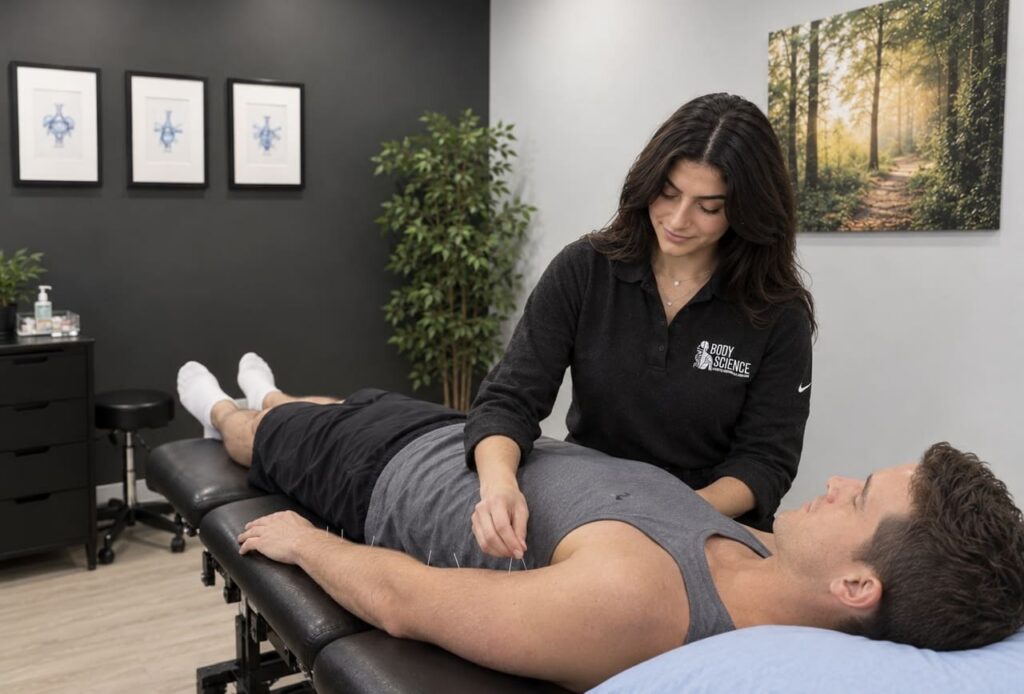
Pain does not always mean something is getting worse. For many people recovering from chronic back pain, migraines, headaches, concussion, or a recurring injury, the obstacle to progress is not damaged tissue. It is a nervous system that has learned to interpret normal movement as a threat. That protective response keeps pain sensitivity elevated, makes exercise feel punishing, and causes setbacks that erode confidence in recovery.
Neurofunctional acupuncture addresses this directly. By targeting specific nerves, muscles, and pain-signaling pathways, it works to reduce the nervous system’s alarm response enough to make movement more tolerable. The goal is not short-term symptom relief. The goal is to open a window for active rehabilitation, so that therapeutic exercise can begin or progress at the right intensity without constantly triggering a flare.
This post walks through the recovery process stage by stage: from the early painful phase where the nervous system stays on high alert, through the role of neurofunctional acupuncture in reducing sensitivity, and into the progressive exercise work that builds strength, mobility, and functional capacity over time.
Why Does Pain Keep the Nervous System on High Alert?
After injury, surgery, or a prolonged period of chronic pain, the nervous system does not simply return to its baseline state. It adapts. Structures throughout the peripheral and central nervous system become sensitized, meaning they respond more strongly to inputs that would normally be harmless. This is called neurological hypersensitivity, and it explains why light activity triggers pain, why tightness returns quickly after treatment, and why headaches worsen with postural stress or screen time.
Common signs that hypersensitivity is a factor in your recovery include:
- Pain with movement that feels disproportionate to the activity
- Muscle guarding or tightness that rebuilds quickly after it is released
- Headaches or migraines triggered by normal neck movement or daily tasks
- Sensitivity to touch, pressure, or temperature near the area of complaint
- Difficulty progressing through exercise without a flare
- A sense that the body is bracing even when no threat is present
This pattern is particularly common in people recovering from concussion, those with chronic back pain involving compensatory movement habits, and anyone who has tried rehabilitation before without sustainable progress. Research on acupuncture’s effects on the peripheral nervous system supports the idea that targeted needle stimulation influences sensory pathways involved in pain modulation, not just local tissue at the site of pain. Understanding this distinction is essential to designing a recovery plan that addresses the actual mechanism driving symptoms.
How Does Neurofunctional Acupuncture Address Pain Sensitivity?
Neurofunctional acupuncture is a modern, anatomy-based approach that applies fine acupuncture needles to specific nerves, motor points, and muscles to influence circulation, neuromuscular tone, and pain-modulating pathways. In some cases, low-level electrical stimulation is applied through the needles to enhance the neurological effect. This is distinct from traditional acupuncture, which follows different diagnostic frameworks. Both use fine needles, but neurofunctional acupuncture is guided by anatomical reasoning about where in the nervous system a dysfunction originates.
The clinical goal at this stage is to reduce excessive protective muscle tone, improve local tissue circulation, and decrease the sensitivity of pain pathways enough to make movement more approachable. Acupuncture for neurological hypersensitivity does not eliminate pain by switching it off. It shifts the nervous system away from a state of continuous alarm so that the body becomes more receptive to movement, loading, and therapeutic input.
Clinical research on acupuncture for pain relief and motor function suggests that needle stimulation influences both nociceptive pathways (those involved in transmitting pain signals) and motor pathways (those involved in controlling movement), which explains why some patients notice both reduced pain and improved movement quality following treatment. Treatment suitability depends on a thorough assessment of your medical history, current symptom irritability, medications, and functional goals.
At Body Science Therapy, both physiotherapists and chiropractors use neurofunctional acupuncture as part of their clinical toolkit. While the two disciplines approach the body through different lenses, both use neurofunctional acupuncture to address the neurological and neuromuscular components of pain rather than treating the symptomatic area in isolation. This integrated perspective is central to how assessment and treatment are structured at the clinic.
How Does Neurofunctional Acupuncture Connect Pain Relief to Active Rehabilitation?
Passive treatment alone, meaning care that does not require the patient to actively load or move the body, has a ceiling. Rest, manual therapy, and acupuncture each serve a purpose in the early recovery phase, but none of them rebuild the strength, mobility, coordination, or tissue capacity needed for a durable return to activity. The window created by effective neurofunctional acupuncture treatment is most valuable when it is used strategically to begin or advance therapeutic exercise.
Acupuncture to support rehabilitation works by lowering the pain barrier enough to allow loading. When the nervous system is less reactive, patients tend to tolerate exercise at a higher dose, respond better to mobility work, and experience fewer setbacks from progressive loading. Neurological treatment techniques in physiotherapy recognize that restoring motor control and sensorimotor integration requires active participation from the patient, not passive intervention alone.
This is the role neurofunctional acupuncture is designed to fill: not a treatment destination, but a transition tool that prepares the nervous system and musculature to engage productively in rehabilitation.
What Does Exercise Progression Look Like When Acupuncture Is Part of the Plan?
Progressing therapeutic exercise during recovery is about finding the right stimulus, enough to promote adaptation, but not so much that symptoms escalate. When pain sensitivity is high, that range is narrow. Neurofunctional acupuncture widens it. Below is a general framework for how exercise progression is structured across recovery stages:
Recovery Phase | Exercise Focus | Clinical Relevance |
Early Phase | Gentle range-of-motion, diaphragmatic breathing, postural awareness | Reduces guarding, establishes body awareness without provoking flare |
Mid Phase | Isometric strengthening, pain-free joint loading, balance training | Rebuilds motor control and tissue capacity in pain-sensitive joints |
Late Phase | Controlled resistance training, functional movement patterns, graded return to sport or work | Restores strength, coordination, and confidence for daily or athletic demands |
For patients managing headaches, migraines, or concussion-related sensitivity, the mid phase often includes specific neck, shoulder, and upper back control work. Cervicogenic contributions to headache frequency and intensity are well established, and restoring neuromuscular control in that region is a clinically meaningful target when symptoms are limiting daily function.
Progress is measured by what patients are able to do, not by how they feel in isolation. Improved range of motion, better tolerance to activity, fewer setbacks between sessions, and restored confidence with daily movement are all functional markers that carry more weight than pain scores alone. Response varies from person to person, and the exercise plan should be adjusted based on symptom behaviour throughout the process.
When Is Neurofunctional Acupuncture Worth Considering?
Neurofunctional acupuncture for pain recovery is worth discussing with your clinician in several situations:
- Chronic pain that reliably flares with any increase in activity level
- Headaches or migraines associated with neck tension, postural loading, or stress
- Concussion recovery where sensitivity to movement and sensory input limits progress
- Chronic back pain with persistent protective muscle tone despite manual therapy or rest
- Stalled rehabilitation where pain prevents meaningful exercise progression
- Recurring injuries with a clear pattern of incomplete recovery
A thorough assessment should look beyond the area of complaint. Movement patterns, neurological sensitivity, strength deficits, mobility limitations, sleep quality, stress load, and activity demands all inform the picture. At Body Science Therapy, the Body Code assessment, a systematic method for identifying neuromuscular dysfunction by analyzing movement patterns and muscle activation sequences, is used to examine the full kinetic chain. This approach recognizes that pain frequently originates from compensatory patterns elsewhere in the body rather than from local tissue damage at the site of symptoms.
Scar tissue is one example of a contributing factor that is often overlooked. Scar tissue carries neurological and neurofunctional implications that extend well beyond the scar itself, and addressing those contributions is part of identifying why some patients remain stuck despite previous treatment. This kind of upstream assessment, combined with treatments like neurofunctional acupuncture, Neurokinetic Therapy (NKT), and Dolphin Neurostim MPS, creates a more complete clinical response than treating only where it hurts.
Patients in Mississauga seeking neurofunctional acupuncture should look for care that integrates systematic assessment with progressive rehabilitation, not isolated treatment sessions without a broader recovery plan.
What Does an Integrated Recovery Plan Include?
A well-structured recovery plan follows a clear sequence that connects each phase of care to the next. The plan adapts based on how symptoms respond, not on a fixed timeline.
- Assessment: Evaluate movement tolerance, neurological irritability, compensatory patterns, and functional goals using a comprehensive kinetic chain assessment such as the Body Code.
- Targeted treatment: Apply neurofunctional acupuncture, NKT, or Dolphin Neurostim MPS where the assessment identifies neuromuscular dysfunction or elevated sensitivity.
- Therapeutic exercise: Introduce movement at an appropriate intensity, using the post-treatment window when the nervous system is more receptive to loading.
- Reassessment: Review symptom behaviour and functional changes after each phase to adjust treatment and avoid overloading the system.
- Education: Equip patients with practical knowledge about pacing, flare management, and return to sport or daily activity, so they develop real autonomy over their own recovery.
The point of this structure is to connect pain relief to measurable functional change. Reduced sensitivity is a starting point. Restored grip strength, improved spinal mobility, fewer headache days, and a confident return to the gym or the trail are the functional targets that define progress. Both physiotherapists and chiropractors at Body Science Therapy apply this framework, each contributing their clinical lens to produce a more complete picture of what is driving symptoms and what will address it at the root.
Key Takeaways
- Neurological hypersensitivity, where the nervous system remains in a protective state after injury or prolonged pain, is a common obstacle to exercise progression and a legitimate clinical target.
- Neurofunctional acupuncture uses fine needles placed at specific nerves, motor points, and muscles to influence pain-modulating pathways, not just the symptomatic area.
- Both physiotherapists and chiropractors use neurofunctional acupuncture as part of an integrated approach to address neuromuscular dysfunction alongside manual therapy and exercise.
- The period following neurofunctional acupuncture treatment is most effective when used for progressive therapeutic exercise, not passive rest alone.
- A thorough assessment of movement patterns, compensatory habits, and neurological sensitivity is essential for identifying root causes rather than chasing symptoms.
- Recovery is measured by functional outcomes: improved motion, better activity tolerance, and fewer setbacks, not pain reduction alone.
Ready to Find Out What Is Keeping Your Recovery Stuck?
If pain, headaches, migraines, concussion symptoms, or chronic back pain are limiting your ability to progress with exercise, a structured assessment is where answers start. Body Science Therapy in Mississauga uses neurofunctional acupuncture as part of an integrated rehabilitation approach that works to identify root causes, reduce pain sensitivity, and support a progressive return to the activities that matter to you.
Book an assessment to determine whether neurofunctional acupuncture is appropriate for your condition and how it fits into a personalized rehabilitation plan built around your goals and your recovery timeline.
Frequently Asked Questions
Is neurofunctional acupuncture the same as traditional acupuncture?
No. Neurofunctional acupuncture is guided by anatomical reasoning, targeting specific nerves, motor points, muscles, and pain-modulating pathways based on clinical assessment. Traditional acupuncture follows different diagnostic frameworks rooted in classical theory. Both use fine needles, but the clinical reasoning, treatment selection, and rehabilitation goals differ meaningfully between the two approaches.
Can neurofunctional acupuncture replace exercise therapy?
No. Neurofunctional acupuncture works to reduce pain sensitivity and improve tolerance to movement, but rebuilding strength, mobility, coordination, and tissue capacity requires progressive exercise. The two approaches work best together, with acupuncture creating conditions that allow therapeutic exercise to proceed at an appropriate and productive intensity.
How quickly does neurofunctional acupuncture work for chronic pain and headaches?
Response varies from person to person. Some patients notice short-term changes in pain or movement quality after early sessions, while others require a longer plan that combines acupuncture, targeted exercise, and education before meaningful functional change takes hold. No specific outcome or timeline is guaranteed, and the plan should be adjusted based on how symptoms respond throughout treatment.