
TLDR
Neurofunctional acupuncture is a clinically guided technique used by physiotherapists and chiropractors to stimulate specific nerve pathways, modulate pain signals, and support improved movement. It works through neurological mechanisms at the tissue, spinal cord, and brain levels, not through mysticism. At Body Science Therapy in Mississauga, it is one component of an individualized, assessment-driven plan designed to address the root contributors to your pain, not just the symptoms.
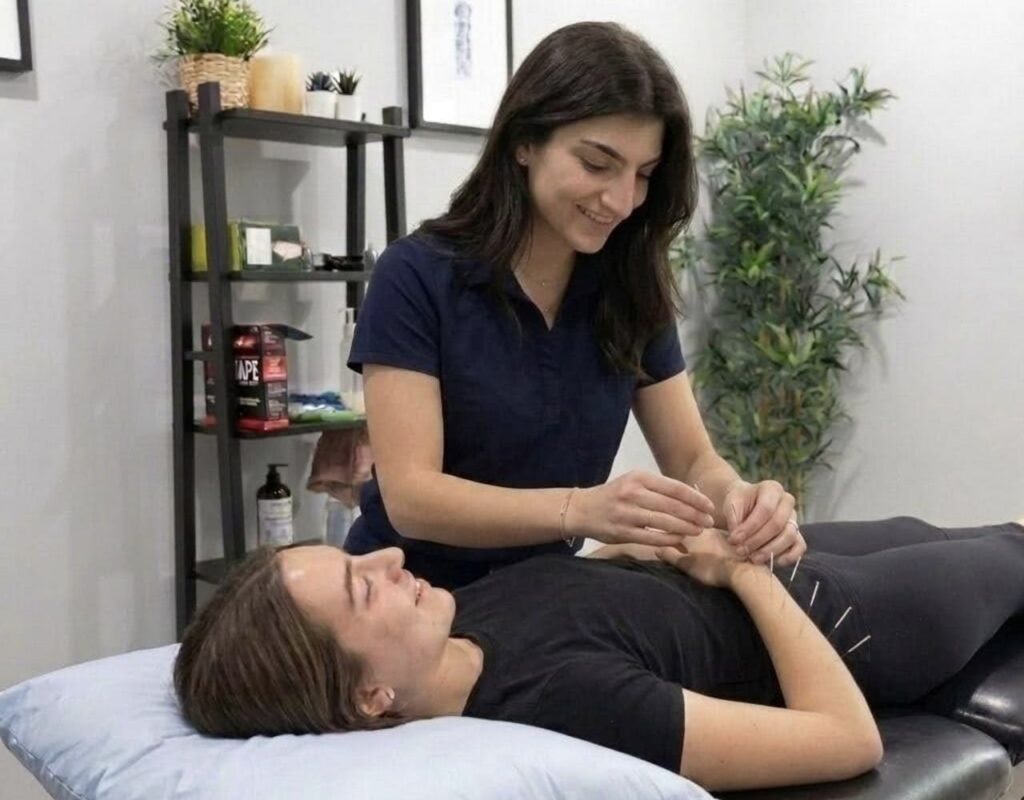
If the word “acupuncture” gives you pause when it shows up in a physiotherapy or chiropractic plan, you are not alone in that reaction. Many people arrive expecting exercise progressions or hands-on manual therapy, and feel uncertain when needles enter the conversation. The hesitation usually comes from a reasonable question: is this science, or something else entirely?
The short answer is that neurofunctional acupuncture is science. It is grounded in anatomy, neurophysiology, and clinical assessment. The longer answer is what this post is here to provide.
Below, you will find a clear explanation of what neurofunctional acupuncture is, what happens physiologically when a needle contacts nerve tissue, why persistent pain conditions like chronic back pain, migraines, and concussion-related symptoms often benefit from a nervous system approach, and what to expect if it becomes part of your care plan.
Why Does Acupuncture Show Up in a Physiotherapy or Chiropractic Plan?
Physiotherapy acupuncture surprises some patients because it does not match the image most people carry of what physiotherapy looks like. The same is true in chiropractic care. Both disciplines, at their root, are concerned with restoring movement, reducing pain, and addressing the mechanical and neurological factors that keep people stuck. Neurofunctional acupuncture fits within that framework as a targeted tool, not a parallel belief system.
Physiotherapists and chiropractors who use neurofunctional acupuncture do not apply it arbitrarily. Needle placement is guided by assessment findings: where muscle tone is elevated, where movement is restricted, where nerve irritation is present, and where the kinetic chain shows signs of dysfunction. For conditions like physiotherapy acupuncture for back pain, the needle sites reflect neurological and muscular anatomy, not tradition alone.
At Body Science Therapy, acupuncture is considered within the context of the Body Code assessment, a systematic evaluation of movement patterns, muscle activation sequences, and compensatory behaviours that identifies where neuromuscular dysfunction is actually originating. Pain in one location often traces back to a dysfunction elsewhere in the chain. Acupuncture, when it is indicated, becomes one tool within a broader individualized plan.
What Does “Neurofunctional” Actually Mean?
Neurofunctional acupuncture focuses specifically on how the nervous system, muscles, joints, and pain pathways communicate with each other. Breaking the term apart helps clarify its purpose.
“Neuro” refers to the nerve and brain component: how sensory information travels from body tissues to the spinal cord and brain, and how the brain processes and responds to that input. “Functional” refers to the goal of treatment: restoring your ability to move, load, and perform daily activities with less pain and more confidence.
The technique uses thin, sterile needles inserted into specific anatomical sites, including skin, fascia, and muscle tissue. This mechanical stimulation activates sensory receptors in those tissues and generates nerve signals that travel through peripheral nerves toward the spinal cord and brain. The clinical aim is to influence how pain signals are processed and how muscle tone is regulated, with the goal of reducing sensitivity and improving movement tolerance.
What Actually Happens When the Needle Stimulates a Nerve Pathway?
Understanding the mechanism makes the treatment less abstract. The effects of acupuncture on nerve pathways operate at three levels: the local tissue, the spinal cord, and the brain.
At the Local Tissue Level
When a needle is inserted, sensory receptors in the skin, fascia, and muscle respond to the mechanical stimulus. This generates afferent nerve signals, meaning signals travelling from the body toward the central nervous system. Locally, changes in muscle tone and blood flow to the area are among the responses that researchers have observed. A study published in PubMed Central on acupuncture and neuropathic pain outlines how peripheral nerve stimulation from acupuncture contributes to modulating pain at the site of application and along the nerve pathway.
At the Spinal Cord Level
Nerve signals from the treatment area travel to the spinal cord, where they interact with other incoming signals. The spinal cord acts as a relay and processing centre, and stimulation through acupuncture needles appears to influence how pain signals are transmitted upward toward the brain. This mechanism, sometimes described as segmental inhibition, is one reason needle placement at anatomically specific sites produces effects that extend beyond the local area.
At the Brain Level
Research into the neurobiological mechanisms of acupuncture indicates that acupuncture stimulation influences brain regions involved in pain modulation, including areas associated with the release of naturally occurring pain-regulating neurochemicals such as endorphins and enkephalins. These are not mystical effects; they are physiological responses to a precise mechanical input.
During a session, you might notice a mild ache, heaviness, warmth, or a small involuntary muscle twitch near the needle site. These sensations reflect nerve and muscle activity and are considered normal responses. Sharp or intense pain is not the goal and should be communicated immediately to your clinician.
Why Do Chronic Pain, Migraines, and Back Pain Often Need a Nervous System Approach?
If you have tried previous therapy and experienced only temporary relief, the reason is worth understanding. Persistent pain does not always indicate ongoing tissue damage. In many chronic conditions, the nervous system itself becomes sensitized, meaning it processes ordinary input as threatening or painful even after the original injury has healed.
Chronic back pain, migraines, headaches, concussion-related symptoms, and complex pain presentations often involve altered pain processing, elevated muscle guarding, and reduced movement confidence rather than structural damage alone. Treating only the local tissue in these cases frequently produces short-lived results because the underlying neurological sensitivity remains unaddressed.
Neurofunctional acupuncture for pain relief, within a broader assessment-driven plan, targets this nervous system sensitivity directly. Acupuncture for chronic pain works alongside active rehabilitation rather than replacing it; the goal is to reduce the neurological barrier to movement so that strengthening, mobility work, and load tolerance training can take effect more fully. For acupuncture for migraines and headaches, the same principle applies: reducing peripheral and central sensitization supports the broader therapeutic work of identifying and addressing the mechanical drivers of symptom recurrence.
Neurokinetic Therapy (NKT), a technique that identifies and corrects faulty movement programming stored in the motor control centre of the brain, and Dolphin Neurostim MPS, a device-assisted approach to reducing scar tissue and neuromuscular tension, are additional tools that integrate with neurofunctional acupuncture in this kind of individualized plan. Together, these approaches address not just where pain is felt, but why it persists.
Scar tissue is one factor that often goes unaddressed in standard care. Scars, whether from surgery, injury, or trauma, produce neurological and inflammatory effects that extend well beyond the scar itself, and these effects contribute to compensatory movement patterns and ongoing pain. Identifying and treating scar-related neuromuscular dysfunction is part of the root-cause assessment process at Body Science Therapy.
What Does the Assessment Look Like Before Acupuncture Is Used?
Neurofunctional acupuncture is not applied as a first response to pain. It is selected when assessment findings indicate it is appropriate for the current stage of care.
A thorough assessment examines symptom history, movement quality, neurological screening where relevant, palpation of soft tissue and joint structures, functional task performance, and your specific goals. The Body Code assessment examines the entire kinetic chain to identify where compensatory movement patterns are creating upstream mechanical failures that contribute to pain and restricted motion. This process shapes the individualized treatment plan, which may or may not include acupuncture depending on what the assessment reveals.
Safety considerations are reviewed as part of this process. Medications that affect bleeding, pregnancy, skin conditions, infection risk, needle sensitivity, and relevant medical history all factor into the decision. Neurofunctional acupuncture is used as part of an active rehabilitation plan, not as a passive intervention in isolation.
Your participation matters throughout. Reporting what you feel during and after treatment, including changes in pain, movement, energy, and symptom patterns, gives your clinician the feedback needed to refine the approach. The aim is to give you enough understanding of what is happening in your body that you become an active contributor to your own recovery, not a passive recipient of treatment.
To learn more about how this approach applies within chiropractic care specifically, visit the neurofunctional acupuncture service page at Body Science Therapy.
What Should You Expect During and After a Session?
A typical session begins with a review of your current symptoms, consent, and an explanation of the target areas and what you may feel. You will be positioned for comfort and access, the skin will be prepared, and thin sterile needles will be inserted at the selected sites. Your clinician monitors your response throughout and removes the needles once the treatment objective for that session is met.
Normal responses include temporary soreness at needle sites, a sense of relaxation or mild fatigue, or a feeling of improved ease in movement. Some people notice changes after the first session; others require several sessions before the pattern becomes clear. Response to acupuncture is individual and influenced by the nature of the condition, overall health status, and other aspects of the treatment plan.
Aftercare is straightforward: gentle movement is generally encouraged, staying well hydrated supports recovery, and it is worth avoiding unusually intense physical activity immediately after a session if you feel sore or fatigued. Tracking how your symptoms and movement change between sessions helps build a more accurate picture of what is working.
Treatment is collaborative at every stage. You are encouraged to ask questions, report sensations honestly, and communicate if anything feels uncomfortable. You can pause or stop treatment at any point.
Key Takeaways
- Neurofunctional acupuncture is a neurologically guided technique used by both physiotherapists and chiropractors, with needle placement determined by anatomy, assessment findings, and the patient’s functional goals.
- Acupuncture stimulates nerve pathways at three levels: local tissue, spinal cord, and brain, each contributing to pain modulation and changes in muscle tone through established physiological mechanisms.
- Chronic pain, migraines, headaches, and concussion-related symptoms often involve nervous system sensitization, not just tissue damage, which is why treatments targeting pain pathways directly address what symptom-focused care sometimes misses.
- The Body Code assessment identifies root-cause neuromuscular dysfunction across the kinetic chain, ensuring that acupuncture and other tools like NKT and Dolphin Neurostim MPS are applied to the actual source of dysfunction, not just the area of pain.
- Neurofunctional acupuncture is most effective as part of an individualized plan that includes active rehabilitation; it is not a standalone solution.
- Patient participation in reporting sensations, tracking symptom changes, and understanding the reasoning behind each treatment decision is a core part of the recovery process at Body Science Therapy.
Ready to Understand What Is Actually Driving Your Pain?
If chronic back pain, migraines, headaches, or concussion-related symptoms have not responded fully to previous care, a more detailed look at the nervous system and the movement patterns contributing to your condition may clarify the next step. Body Science Therapy in Mississauga uses an integrated, assessment-based approach to determine whether neurofunctional acupuncture belongs in your personalized care plan, and to identify the root-cause patterns that standard treatment often overlooks.
Book a physiotherapy or chiropractic assessment to find out whether neurofunctional acupuncture is appropriate for your pain, your movement goals, and your recovery plan.
Frequently Asked Questions
Is neurofunctional acupuncture the same as traditional acupuncture?
Neurofunctional acupuncture uses the same thin needles as traditional acupuncture, but the clinical reasoning is based on anatomy, neurophysiology, muscle function, and the findings of a physiotherapy or chiropractic assessment. Traditional acupuncture practices vary widely depending on the practitioner’s training and may use different diagnostic frameworks. In a physiotherapy or chiropractic context, needle placement is guided by the nervous system and musculoskeletal findings specific to your condition and goals.
Does neurofunctional acupuncture hurt?
Most people feel mild pressure, heaviness, a dull ache, warmth, or a small involuntary muscle twitch near the needle site rather than sharp pain. These sensations reflect nerve and tissue activity and are a normal part of the response. Sensations should remain tolerable throughout, and your clinician will adjust or stop treatment if anything feels uncomfortable or distressing.
Can acupuncture help chronic back pain, migraines, or headaches?
Acupuncture stimulates nerve pathways in ways that research suggests contribute to reducing pain sensitivity and improving movement tolerance for some people, particularly when it is part of a broader assessment-driven plan. The degree of benefit depends on assessment findings, the nature of the condition, medical history, and individual response to treatment. A thorough assessment is the most reliable way to determine whether neurofunctional acupuncture is an appropriate part of your care.