
TLDR
Neurofunctional acupuncture is an assessment-driven approach that targets the nervous system, muscle activation, and movement patterns to address compensation and inhibition before they contribute to persistent pain. Used preventively by physiotherapists and chiropractors, it works alongside movement retraining, manual therapy, and strength programming to support more efficient, symmetrical function. At Body Science Therapy in Mississauga, clinicians use their signature Body Code assessment combined with treatments like neurofunctional acupuncture, Neurokinetic Therapy (NKT), and Dolphin Neurostim MPS to identify and address the root causes of altered movement, not just the symptoms.
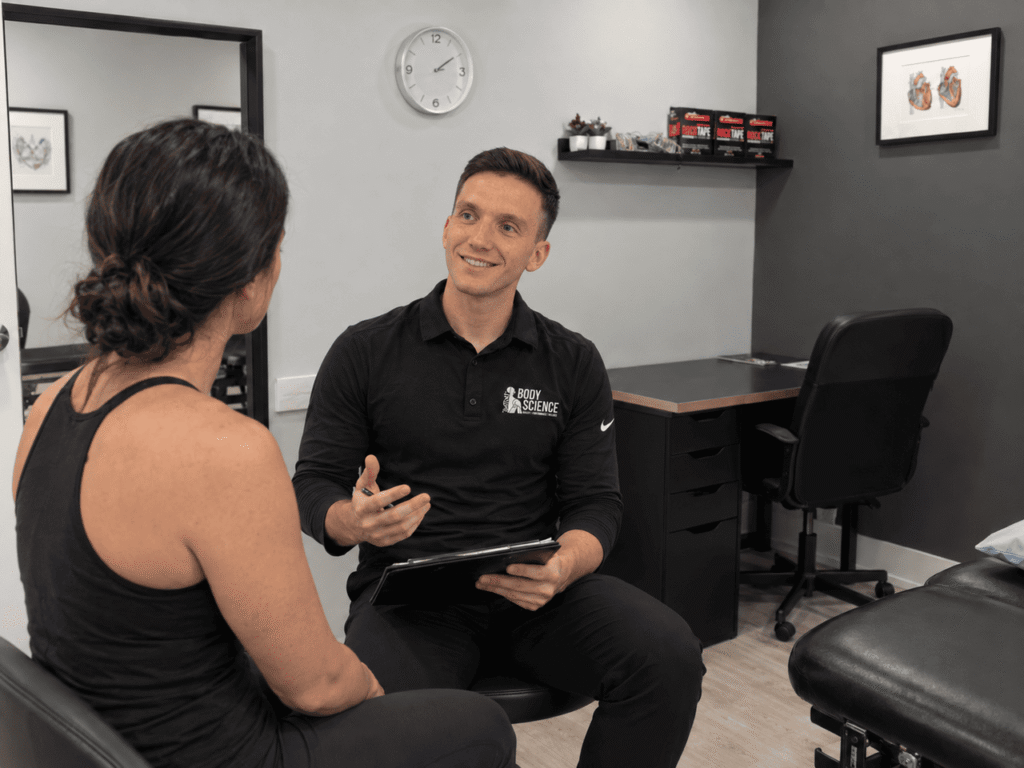
Pain is rarely the first sign that something has changed in how your body moves. More often, it arrives after weeks or months of subtle compensation, when the nervous system has already established new, less efficient movement strategies to protect an area of dysfunction. By the time it becomes a problem you cannot ignore, the pattern has often been reinforced enough to require meaningful clinical work to address.
Neurofunctional acupuncture offers a different entry point. Rather than waiting for symptoms to become severe, this clinically guided approach examines how the nervous system, muscles, and movement patterns are interacting, and uses targeted needling to address inefficiencies before they become chronic. This post explains what neurofunctional acupuncture is, what it is designed to influence, and who is most likely to benefit from using it as a preventive strategy.
This article is educational. Treatment decisions should always be based on an individualized assessment by a qualified, regulated clinician.
Do Faulty Movement Patterns Start Before Pain Becomes Chronic?
Yes, and this is one of the most important things to understand about musculoskeletal pain. Repeated sitting, training fatigue, old injuries, headaches, and protective guarding all change how the nervous system recruits muscles over time. The body prioritizes function over form: if one muscle is unavailable or underperforming, nearby structures compensate. This is adaptive in the short term, but over months or years, those compensations become the default.
Motor pattern dysfunction refers to the situation where the body uses inefficient muscle strategies to complete basic or athletic movements. A few common examples without suggesting any specific diagnosis: hip flexors may take on excessive load when gluteal muscles are inhibited, deep cervical stabilizers may underperform while neck extensors overwork, or low back muscles may compensate for poor trunk control during lifting or rotation. None of these patterns necessarily cause immediate pain, but they increase cumulative strain on joints, tendons, and passive structures.
The prevention logic is straightforward. Early changes in motor control are generally more responsive to intervention than entrenched patterns that have been reinforced over years. Identifying them through careful clinical assessment creates an opportunity to address the underlying neuromuscular issue before the body has fully committed to a compensatory strategy. Research into noninvasive nonpharmacological treatment for chronic pain supports early intervention, noting that addressing musculoskeletal dysfunction before it becomes chronic is associated with better functional outcomes.
What Is Neurofunctional Acupuncture Designed to Influence?
Neurofunctional acupuncture is a modern, assessment-based application of acupuncture that focuses on the nervous system, muscle activation, nerve pathways, joint function, and movement quality. It uses acupuncture needles placed at clinically selected sites based on neuroanatomy, muscle activation patterns, and movement assessment findings rather than relying solely on traditional meridian-based frameworks.
Treatment aims to influence muscle tone, sensory input, and neuromuscular recruitment. The goal is not simply to relax a tight muscle. A tight muscle is often a sign that the nervous system is guarding, compensating, or responding to poor sensory input from a nearby joint or inhibited synergist. Neurofunctional acupuncture attempts to address that upstream picture: why is this muscle overactive, inhibited, painful, or poorly coordinated within the broader kinetic chain?
At Body Science Therapy, this approach integrates with the Body Code assessment, a systematic clinical method for analyzing movement patterns and muscle activation sequences across the full kinetic chain. The Body Code recognizes that pain symptoms frequently originate from compensatory patterns rather than local tissue damage alone. Neurofunctional acupuncture is applied within that framework, alongside Neurokinetic Therapy (NKT) and Dolphin Neurostim MPS, to address findings in a coordinated, individualized way. Physiotherapists and chiropractors both use neurofunctional acupuncture at the clinic, each integrating it within their respective scopes and clinical reasoning processes.
Neurofunctional acupuncture may support pain modulation, muscle recruitment, and movement quality. Results vary based on the individual’s presentation, chronicity, and overall plan of care.
What Does Muscle Inhibition Signal, and Why Does It Matter for Prevention?
Muscle inhibition describes a situation where a muscle tests weak or feels functionally unavailable not because it lacks strength in isolation, but because the nervous system is not recruiting it efficiently in context. This distinction matters because standard strengthening exercises will not fully resolve inhibition if the neuromuscular signal is the underlying issue.
Several signs suggest altered activation patterns worth assessing. These are not diagnostic, but they indicate that a clinical evaluation would be worthwhile.
- One side feels less stable during squats, stairs, running, golf, or overhead lifting, even with consistent training.
- Stretching gives temporary relief but tightness returns reliably within hours or days.
- A familiar ache appears after desk work, driving, or weekend activity and resolves with rest, only to return.
- Strength work feels uneven or one side consistently fatigues faster without a clear structural reason.
- Recurring flare-ups happen in the same area despite trying multiple approaches.
These patterns require assessment, not self-diagnosis. Neurofunctional acupuncture is one tool that, when clinically indicated, can help reduce protective tone, improve sensory input from joints and soft tissue, and prepare the neuromuscular system for more effective movement retraining.
How Does Neurofunctional Acupuncture Support Athletes and Active People?
Weekend warriors, golfers, runners, cyclists, and recreational lifters often train through stiffness or manage recurring flare-ups with rest and stretching. This is a common pattern, and it usually reflects a motor control issue rather than a tissue tolerance problem. Fatigue, previous injury, and accumulated compensatory strain all alter how force is produced, absorbed, and distributed across a movement. The result is asymmetrical loading, reduced performance, and a higher likelihood of injury recurrence.
Neurofunctional acupuncture for athletes is not a stand-alone performance intervention. Used preventively as part of a broader care plan, it supports the goal of identifying and addressing inhibited stabilizers, asymmetrical recruitment patterns, and movement inefficiencies before they contribute to injury or training limitation. Research examining acupuncture’s effect on delayed-onset muscle soreness following strenuous exercise supports its role in recovery and neuromuscular function alongside active training.
In practice, this means pairing neurofunctional acupuncture with:
- Sport-specific movement retraining to reinforce better activation patterns under load.
- Progressive strength programming that addresses inhibited muscles identified in assessment.
- Load management strategies to reduce compensatory strain during training cycles.
- Mobility and stability work targeted at specific kinetic chain findings rather than general flexibility.
The functional goal is to help the body recruit muscles more symmetrically, tolerate training volume with less unnecessary strain, and identify inhibited stabilizers before they contribute to a pattern that sidelines activity.
How Does Neurofunctional Acupuncture Apply to Desk Workers and Sedentary Postures?
Long periods of sitting, screen work, and low movement variety create predictable patterns of neuromuscular imbalance. Deep neck flexors and scapular stabilizers tend to underperform while upper trapezius and suboccipital muscles carry excess load. Glutes and trunk stabilizers become harder to access after prolonged hip flexion. Over time, these patterns contribute to neck pain, shoulder tension, low back ache, and headaches, all of which are symptoms many desk workers normalize as part of the workday.
Headaches and migraines in particular are influenced by multiple systems including cervical joint mechanics, muscular tension, autonomic regulation, and sensory input from the upper cervical region. They warrant thorough clinical evaluation rather than self-management assumptions. The integrative rehabilitation literature on spinal dysfunction underscores the value of assessing the full clinical picture rather than treating individual symptoms in isolation.
Neurofunctional acupuncture for desk workers addresses these patterns by targeting the muscular and neurological contributors to postural compensation. This is not about achieving a rigid “correct” posture but about reducing the load on overworked structures and improving access to underperforming ones. Clinicians at Body Science Therapy assess not just where discomfort is felt but the broader neuromuscular picture driving it, including contributions from scar tissue, prior injury, and altered sensory signaling.
Treatment pairs naturally with practical daily strategies:
- Short, frequent movement breaks rather than prolonged static holds.
- Progressive strengthening targeting specific inhibited muscles identified in assessment.
- Breathing and postural variability practices rather than rigid posture correction.
- Workstation changes where clinically relevant and practically feasible.
Why Do the Best Outcomes Come From Combining Needling With Movement Retraining?
Neurofunctional acupuncture is not a complete solution for complex or chronic conditions on its own. Its value is in what it enables: a window of improved neuromuscular accessibility that, when reinforced with targeted exercise and movement retraining, gives the nervous system a reason to maintain the change.
The clinical sequence at Body Science Therapy reflects this logic. Clinicians, whether working within physiotherapy or chiropractic care, first assess the patient’s pain history, movement quality, strength, neurological presentation, and daily or sport-specific demands. Neurofunctional acupuncture is applied when the assessment supports its use, targeting the muscular and neurological contributors identified through the Body Code assessment and tools like NKT and Dolphin Neurostim MPS. Movement is re-tested after treatment to determine whether recruitment patterns or range of motion have shifted. Then, targeted exercise and load progression are used to reinforce those changes in real-world conditions.
Assessment Step | Clinical Purpose |
Body Code assessment | Identify movement pattern dysfunction and muscle activation sequencing |
Neurofunctional acupuncture | Address tone, sensory input, and neuromuscular recruitment |
Neurokinetic Therapy (NKT) | Identify compensatory patterns at the motor control level |
Dolphin Neurostim MPS | Support neuromuscular re-regulation and scar tissue management |
Movement retraining and exercise | Reinforce better activation patterns through progressive loading |
Equally important is patient education. Understanding what drives your symptoms, which muscles are underperforming and why, and how to support your own recovery between sessions gives you meaningful autonomy over your health. That knowledge is part of the care, not a footnote to it.
A note for anyone with red flags: unexplained neurological symptoms, progressive weakness, recent trauma, worsening headaches, or symptoms that are rapidly changing should prompt prompt medical or regulated clinical assessment. Do not use this article as a substitute for evaluation.
Key Takeaways
- Neurofunctional acupuncture targets the nervous system, muscle activation patterns, and movement quality, not just the site of pain or tension.
- Motor pattern dysfunction refers to inefficient muscle recruitment strategies that increase compensatory strain over time, often well before pain becomes chronic.
- Both physiotherapists and chiropractors at Body Science Therapy use neurofunctional acupuncture, integrating it within individualized care plans guided by the Body Code assessment.
- Muscle inhibition is a neuromuscular recruitment problem, not only a strength deficit; standard exercise alone may not fully resolve it without addressing the underlying signal.
- Neurofunctional acupuncture is most clinically useful when combined with movement retraining, targeted strengthening, and tools like NKT and Dolphin Neurostim MPS as part of a coordinated plan of care.
- Athletes and desk workers with recurring stiffness, asymmetrical strength, or symptoms that return despite stretching may benefit from a clinical assessment to identify the contributing movement pattern dysfunction.
Catch Movement Problems Before They Become Chronic
Body Science Therapy in Mississauga provides assessment-driven care for people managing recurring pain, complex movement issues, chronic back pain, headaches, concussion-related concerns, and training limitations. Physiotherapists and chiropractors at the clinic work with patients through the Body Code assessment to identify the neuromuscular patterns driving symptoms, then build individualized plans that address root causes rather than managing discomfort in isolation.
If you are noticing movement asymmetries, recurring tightness, or symptoms that keep returning despite previous treatment, a clinical assessment is the appropriate starting point. Learn whether neurofunctional acupuncture is appropriate for your presentation and how it fits within a broader care plan that includes movement retraining, manual therapy, strength programming, and recovery education.
Book an assessment to identify the movement patterns, muscle inhibition, and compensatory strain that are contributing to your recurring symptoms. You deserve to understand what is driving the problem and what to do about it.
Frequently Asked Questions
Is neurofunctional acupuncture the same as traditional acupuncture?
Neurofunctional acupuncture uses acupuncture needles but applies clinical reasoning focused on neuroanatomy, muscle activation, pain modulation, and movement function. Traditional acupuncture often uses different diagnostic frameworks rooted in classical theory. The two approaches are not interchangeable, and the right choice depends on the provider’s training, the patient’s presentation, and the findings from a thorough assessment.
Can neurofunctional acupuncture prevent chronic pain?
No treatment can guarantee prevention of chronic pain. When used as part of a broader, assessment-guided care plan, neurofunctional acupuncture addresses early signs of altered muscle activation, protective guarding, and compensatory movement patterns that are known contributors to persistent symptoms. Early identification and treatment of these patterns through a comprehensive assessment is a clinically sound preventive strategy.
Who should consider an assessment for neurofunctional acupuncture and movement patterns?
Athletes, desk workers, weekend warriors, and people with recurring pain are good candidates for assessment if they are noticing repeated tightness in the same area, uneven strength or stability, movement hesitation, or symptoms that return after stretching or exercise. Treatment is always individualized and based on clinical findings, not a general protocol. A regulated clinician will determine whether neurofunctional acupuncture is appropriate and how it integrates with other components of care.