
TLDR
Cervicogenic headaches originate from mechanical dysfunction in the cervical spine, including restricted joints, overactive muscles, and postural loading patterns that irritate nerves and refer pain into the head. Physiotherapists and chiropractors assess these contributors through structured evaluation of movement, segmental mobility, muscle tone, and posture. Treatment is selected based on specific findings, not the headache label alone, and focuses on restoring movement capacity and reducing mechanical irritation in the neck.
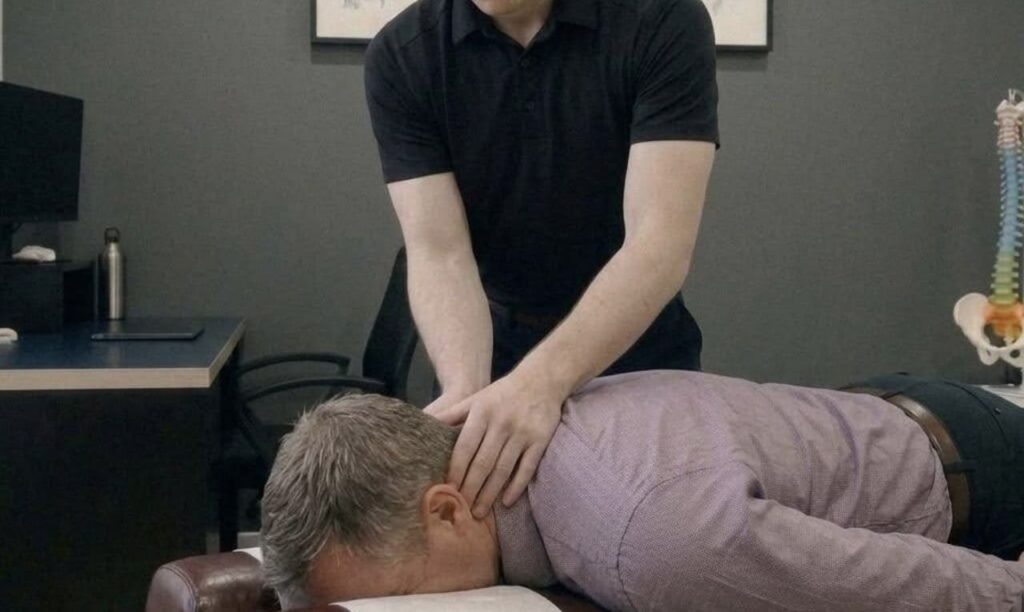
Not every headache starts in the head. Some begin further down, in the upper cervical spine, where joints, muscles, nerves, and postural load interact in ways that send pain upward into the skull, temples, forehead, or behind the eye. If your headaches come with neck stiffness, worsen after long periods of sitting or driving, or have not responded to previous treatment, the neck may be a meaningful part of the picture.
Cervicogenic headache is a secondary headache pattern linked to cervical spine dysfunction. It is distinct from primary headache conditions like migraine or tension-type headache, though the symptoms overlap enough to make accurate assessment essential. Understanding how chiropractic care helps with headaches starts with identifying whether the neck is contributing to the pain pattern in the first place.
This post walks through the clinical assessment process that physiotherapists and chiropractors use: what they look for, why it matters, and how findings shape a personalized care plan rather than a generic protocol.
What Causes Cervicogenic Headaches?
Cervicogenic headaches occur when structures in the cervical spine refer pain into the head. Research on cervicogenic headache identifies the upper cervical segments, particularly C1 through C3, as the most common sources, because the nerves at these levels share pathways with the trigeminal nerve, which supplies sensation to much of the face and head.
Several mechanical contributors are assessed during a clinical intake:
- Restricted movement at the upper cervical joints, particularly rotation and flexion at C1-C2
- Irritated or compressed cervical nerve roots
- Overactive or shortened suboccipital muscles, upper trapezius, levator scapulae, sternocleidomastoid, and scalene muscles
- Reduced neck mobility or poor load tolerance under sustained positions
- Postural loading patterns from prolonged sitting, desk work, device use, or driving
Pain referred from these structures does not stay in the neck. It travels into the base of the skull, the temple, the forehead, and sometimes behind the eye or into the jaw region. This referral pattern is one reason cervicogenic headaches are frequently misidentified or untreated at their actual source.
A clinical note worth keeping in mind: assessment by a physiotherapist or chiropractor does not replace medical diagnosis. Sudden, severe, or unusual headaches, particularly those accompanied by neurological symptoms, need medical evaluation before conservative care begins.
How Do Clinicians Assess Joint Restrictions in the Cervical Spine?
Chiropractic treatment for headaches and physiotherapy care should both begin with a structured assessment, not a standard adjustment or exercise plan applied without context. The cervical spine has seven vertebrae, and restrictions at different segments produce different symptom patterns. Identifying the specific level matters.
A structured cervical assessment typically includes:
- Cervical range of motion, including rotation, flexion, extension, and lateral flexion
- Segmental mobility testing of individual cervical and upper thoracic joints
- Pain provocation testing to determine whether familiar headache symptoms are reproduced
- Observation of neck stiffness, guarding, and movement asymmetry
- Thoracic spine mobility and shoulder mechanics when relevant to the overall posture and load pattern
Joint restrictions increase local mechanical irritation, alter movement sequencing, and place disproportionate load on surrounding soft tissue. Over time, these patterns contribute to recurring headache episodes rather than resolving on their own.
At Body Science Therapy, assessment goes beyond segmental joint testing. The Body Code system is a structured approach to identifying neuromuscular dysfunction by analyzing movement patterns and muscle activation sequences across the whole kinetic chain. This matters because pain symptoms frequently originate from compensatory patterns, where one area compensates for a restriction or weakness elsewhere, rather than from isolated tissue damage at the site of pain.
Can Muscle Trigger Points Refer Pain Into the Head?
Yes. Trigger points, which are sensitive, overactive areas within muscle tissue that produce local tenderness and refer pain to other regions, are a well-documented contributor to neck pain and headaches. Conservative physical therapy management for cervicogenic headache identifies soft tissue treatment as a core component of care for this reason.
The muscles most commonly involved include:
- Suboccipitals, which sit at the base of the skull and refer pain into the back of the head
- Upper trapezius, which refers into the temple and side of the head
- Levator scapulae, which contributes to neck stiffness and upper shoulder loading
- Sternocleidomastoid, which refers into the forehead, eye, and ear regions
- Scalenes, which affect rib and breathing mechanics and influence neck load
- Temporalis and jaw muscles when jaw tension is part of the presentation
Muscle tone in these regions stays elevated for a range of reasons: previous injury, protective guarding, stress, poor endurance in the deep neck flexors, or simply the cumulative load of sustained postures without adequate recovery. Assessment includes palpation for tenderness and referred pain patterns, strength and endurance testing of the deep neck stabilizers, breathing mechanics when neck muscles appear to be compensating for shallow or inefficient respiration, and screening of the jaw, shoulder girdle, and upper back when symptoms suggest broader involvement.
Treatment decisions follow from these findings. Soft tissue therapy, Neurokinetic Therapy (NKT), and targeted strengthening are selected based on what the assessment reveals, not applied as a routine regardless of findings. NKT is a manual therapy and assessment system that identifies which muscles are inhibited and which are compensating, allowing clinicians to address the underlying neuromuscular pattern rather than the tight muscle alone.
Is Posture Really Contributing to Your Headaches?
Posture is not about achieving a rigid or ideal alignment. Clinically, posture becomes a problem when tissues are held under sustained mechanical load without sufficient movement capacity, muscular endurance, or recovery time. The neck pays a disproportionate price for postural patterns that are common in desk-based work, long commutes, and high screen time.
Common patterns seen during assessment include:
- Forward head posture, which increases compressive load on the upper cervical joints
- Rounded upper back with reduced thoracic extension
- Elevated and anteriorly tilted shoulders
- Shallow breathing patterns that overload the neck and scalene muscles
- Poor workstation or driving ergonomics that sustain these positions for hours at a time
Posture alone is rarely the full diagnosis. What matters is how the posture pattern affects movement, symptom provocation, and tissue tolerance over time. Assessment includes a review of workstation setup, sleep position and pillow height, screen time and movement frequency, training habits for active patients and weekend warriors, and driving duration and head position during commutes.
The aim is not to correct posture into a fixed position. The aim is to give the cervical spine more movement options, more capacity to absorb load, and less time spent at the end range of mechanical tolerance.
When Do Headaches Require Medical Attention Instead of Manual Therapy?
A responsible physiotherapy or chiropractic assessment includes screening for red flags and non-mechanical headache patterns. An evidence-led approach to cervicogenic headache management emphasizes the importance of accurate differential diagnosis before initiating conservative care.
The following symptoms require urgent medical evaluation:
- A sudden, severe headache described as the worst experienced, sometimes called a thunderclap headache
- New headache onset following trauma or head injury
- Headache accompanied by fever, confusion, fainting, or unexplained weight loss
- Vision changes, speech difficulty, facial drooping, or limb weakness
- New headache pattern after age 50
- Headache accompanied by severe dizziness, vomiting, or any combination of neurological symptoms
Migraine warrants a specific note. Migraine is a neurological condition and often requires medical management. Chiropractic or physiotherapy care is not a treatment for migraine as a primary neurological disorder. That said, neck dysfunction, muscle tension, and postural loading patterns frequently contribute to the overall headache picture in people who also experience migraine, and addressing those contributors through manual therapy and movement rehabilitation may reduce their frequency or intensity for some individuals. Assessment should distinguish cervicogenic features from migraine features wherever possible, and medical care should not be deferred when it is indicated.
How Do Assessment Findings Guide Treatment?
Treatment is selected based on specific assessment findings, not the headache label alone. Two people presenting with neck pain and headaches may have entirely different contributing factors and require different approaches.
Assessment Finding | Possible Treatment Component |
Restricted cervical or thoracic joint mobility | Gentle mobilization or chiropractic spinal manipulation where appropriate and consented to |
Active trigger points in neck and shoulder muscles | Soft tissue therapy, NKT, Dolphin Neurostim MPS |
Weak deep neck flexors and poor cervical endurance | Targeted deep neck flexor strengthening and load progression |
Poor thoracic mobility and rounded upper back | Thoracic mobility work, scapular strengthening, postural coaching |
Postural loading from work or training habits | Ergonomic review, movement frequency coaching, gradual return to activity |
Scar tissue or neurofunctional involvement | Scar management, Neurofunctional Acupuncture, neurological assessment |
Dolphin Neurostim MPS is a microcurrent point stimulation device used to address neuromuscular tension, scar tissue, and autonomic nervous system involvement in pain patterns. Neurofunctional Acupuncture uses acupuncture within a neurophysiological framework to modulate pain and improve muscle activation. These approaches are integrated with manual therapy and therapeutic exercise based on what the assessment identifies, not as a routine applied to every presentation.
Scar tissue is one contributor that is frequently overlooked in headache presentations. Scar tissue from previous surgeries, injuries, or trauma influences how the nervous system reads and responds to mechanical input across the body. Addressing the neurological implications of scar tissue is part of a thorough root-cause assessment at Body Science Therapy.
Throughout the process, the goal is to give you the knowledge and tools to understand what is happening in your body and to contribute actively to your own recovery, not to create ongoing dependence on treatment.
Key Takeaways
- Cervicogenic headaches originate from mechanical dysfunction in the cervical spine, including restricted joints, overactive muscles, and sustained postural loading, and are classified as secondary headaches distinct from migraine or tension-type headache.
- The upper cervical segments (C1 to C3) are the most common sources of referred head pain because their nerve pathways overlap with the trigeminal nerve, which supplies sensation to the face and skull.
- A structured clinical assessment examines cervical range of motion, segmental joint mobility, muscle trigger points, deep neck flexor strength, breathing mechanics, and postural loading patterns before any treatment is selected.
- Neuromuscular dysfunction and compensatory movement patterns, identified through the Body Code system, frequently contribute to cervicogenic headaches and require assessment beyond the local pain site.
- Sudden, severe, or neurologically associated headaches require medical evaluation before conservative physiotherapy or chiropractic care begins.
- Effective care targets the specific mechanical and neuromuscular contributors identified in the assessment, combining manual therapy, therapeutic exercise, and patient education to support recovery.
Start With a Structured Assessment, Not a Guess
If you experience recurring headaches, neck stiffness, posture-related head pain, or headaches that have not improved with previous care, the cervical spine may be a significant part of the picture. The first step is understanding what is actually contributing to your symptoms.
At Body Science Therapy in Mississauga, physiotherapy and chiropractic care are delivered together through an integrated, root-cause approach. Using the Body Code system alongside treatments including NKT, Dolphin Neurostim MPS, and Neurofunctional Acupuncture, the focus is on identifying mechanical, neuromuscular, and movement-related contributors to your headaches and building a personalized plan to address them.
The aim is not to manage symptoms indefinitely. It is to give you a clearer picture of what is driving your pain, restore your movement capacity, and equip you with the knowledge to maintain progress on your own.
Please note: if your headaches are sudden, severe, or accompanied by neurological symptoms, seek medical assessment before beginning conservative care.
Frequently Asked Questions
Can neck problems really cause headaches?
Yes. Cervicogenic headaches occur when structures in the cervical spine, including joints, muscles, and nerves, refer pain into the head. The upper cervical segments share nerve pathways with the trigeminal nerve, which is why restricted or irritated tissue at these levels produces symptoms felt in the skull, temples, forehead, or behind the eye. A clinical assessment helps determine whether the neck is likely contributing to your specific headache pattern.
Is chiropractic treatment for headaches the same for every patient?
No. Treatment depends on assessment findings, not the headache label. Some patients present with joint restrictions that respond to mobilization or spinal manipulation. Others have trigger points, neuromuscular compensation patterns, deep neck flexor weakness, or postural loading issues that require soft tissue therapy, targeted strengthening, or ergonomic changes. A thorough assessment determines which contributors are present before any approach is applied.
Can chiropractic or physiotherapy care help with migraines?
Migraine is a neurological condition and often requires medical management. Chiropractic or physiotherapy care is not a treatment for migraine as a standalone neurological disorder. However, when cervical dysfunction, muscle tension, or postural loading patterns contribute to the overall headache picture in someone who also experiences migraine, addressing those mechanical contributors through manual therapy and movement rehabilitation may reduce the frequency or severity of headache episodes for some individuals. Assessment should clarify whether cervicogenic features are present and whether medical care is indicated alongside or before conservative treatment.